Red Mosque of Panjunan, 15th-century mosque in Panjunan village, Cirebon, Indonesia.
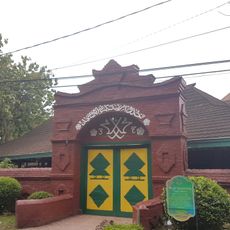
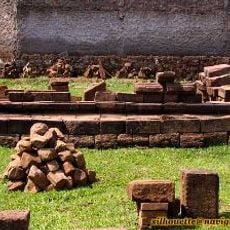
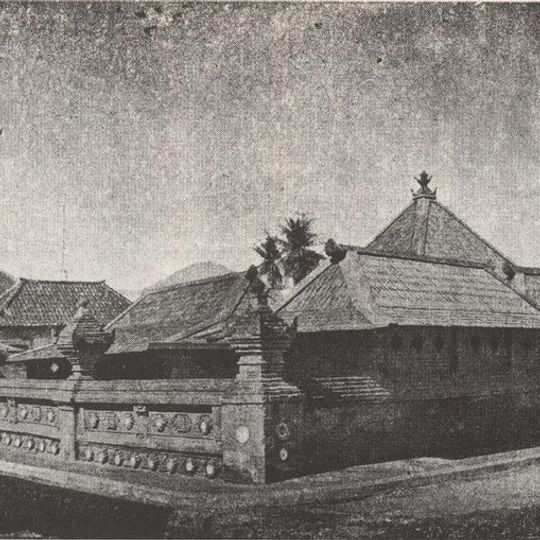
The Red Mosque of Panjunan is a small place of worship from the 15th century covering about 150 square meters, with red brick walls, a divided entrance gate, and a pyramid-shaped roof. The interior space is supported by twelve posts, while the surrounding walls serve only decorative purposes.
The building was founded in 1480 by Syarif Abdurrahman, a teacher who arrived from Baghdad and worked with Sunan Gunung Jati. The original structure was much smaller and later developed into the preserved structure seen today.
The red brick walls display a blend of Indonesian, Chinese, and Indian influences, visible in ceramic plates decorating the interior and a prayer niche shaped like a traditional gate. This mix of styles reflects the cultural connections that Panjunan developed over many centuries.
The entrance features an intentionally low door, so visitors must bend when entering, which is a gesture of respect toward the sacred space. The building primarily functions for daily prayers rather than major religious celebrations.
The remarkable feature is the structural design: only the twelve interior posts carry the roof weight, while the outer walls are completely load-free. This unusual system allows the interior space to feel unusually open and connected to the surroundings.
The community of curious travelers
AroundUs brings together thousands of curated places, local tips, and hidden gems, enriched daily by 91,665 contributors worldwide.