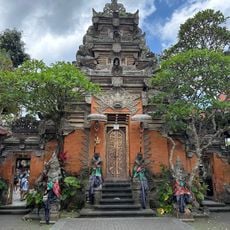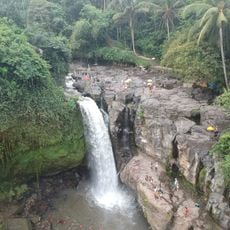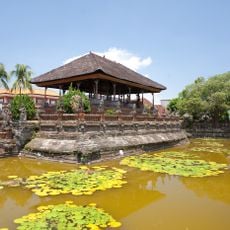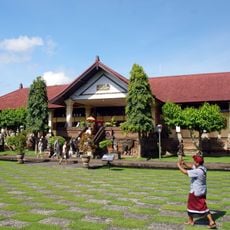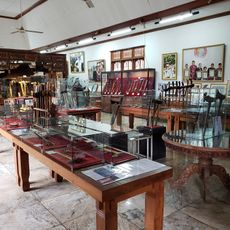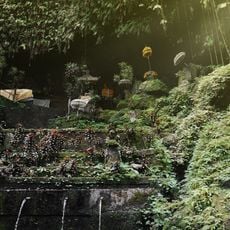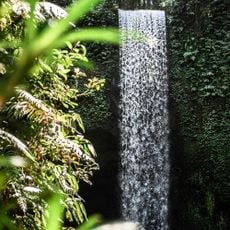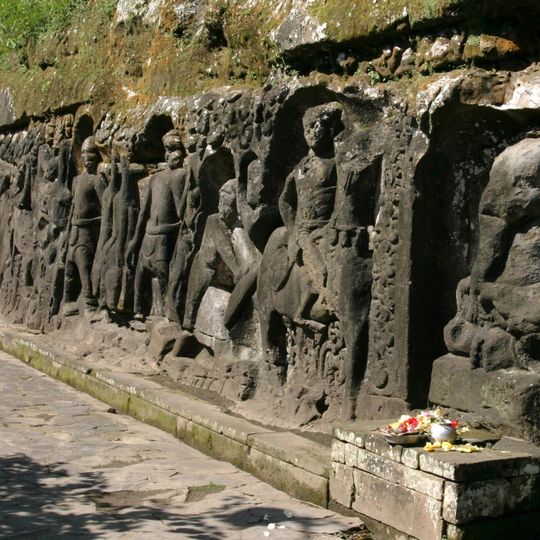
Yeh Pulu, Archaeological site in Bedulu, Indonesia.
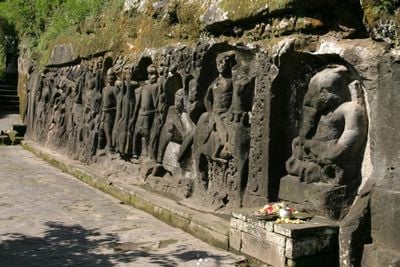
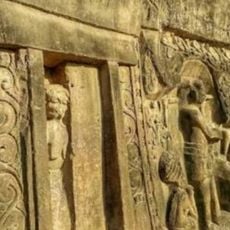
Yeh Pulu is an archaeological site featuring a 40-meter-long rock wall carved with detailed relief panels. The carvings depict people, animals, and scenes of daily life from ancient Bali, with figures reaching about 2 meters in height.
The site was discovered in 1920 by local residents, which prompted Dutch researchers to investigate and document the carvings. The relief panels date to around 1500, marking an important record of late medieval Bali.
The name combines two Balinese words: Yeh meaning water and Pulu referring to a rice storage container. This naming reflects the importance of water and farming in ancient Balinese society.
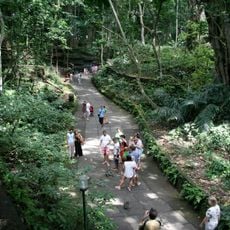
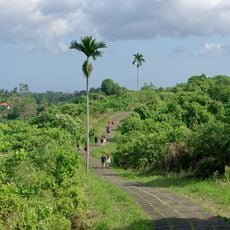
The site sits at 175 meters elevation and can be reached by walking on designated paths leading to the main carved panels. Visitors should wear comfortable shoes and allow time to explore the different relief sections at a relaxed pace.
One of the carvings shows a man carrying water containers, documenting ancient irrigation practices in remarkable detail. This scene offers a rare glimpse into the everyday realities of that era's farming life.
The community of curious travelers
AroundUs brings together thousands of curated places, local tips, and hidden gems, enriched daily by 90,979 contributors worldwide.