Kurth Kiln, Heritage site in Gembrook, Australia.
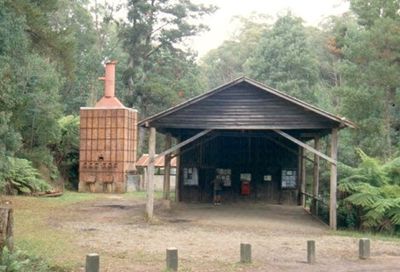
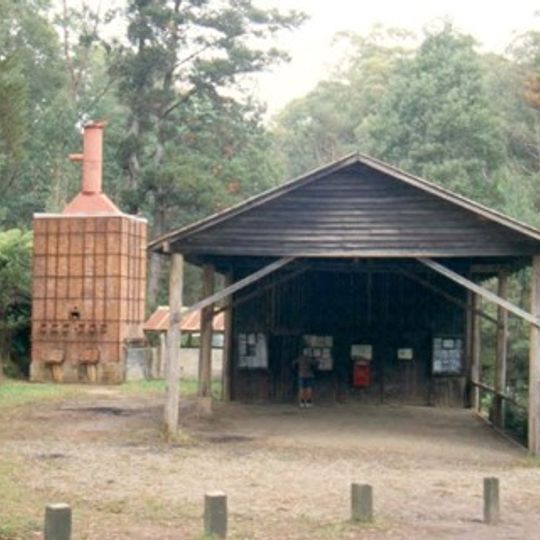
Kurth Kiln is a charcoal kiln and storage shed on Soldiers Road, about seven kilometres north of Gembrook in the Kurth Kiln Regional Park. A tall tan and orange brick chimney stands on a square brick base beside an open-sided shelter with a low-pitched roof of dark horizontal boards on dark timber posts. The dirt floor beneath the overhang holds a red box and notice boards.
The Forests Commission Victoria built the kiln between 1941 and 1942 to make charcoal as a substitute fuel during World War II petrol rationing. Dr Ernest Edgar Kurth of the University of Tasmania designed it and was paid A£5 for the patented design; the whole works cost A£1,799, seventeen shillings and tuppence. Production began in March 1942, but transport difficulties and oversupply from private operators meant intermittent use in 1943 before shutdown. It yielded only 427 tonnes of charcoal.
The kiln's name honours Dr Ernest Edgar Kurth of the University of Tasmania, who designed it and was paid A£5 for the use of his patented design. Charcoal from Gembrook fed gas producer units fitted to cars and trucks, and some of Melbourne's buses ran on charcoal during the war. The site lies on the traditional lands of the Wurundjeri people.
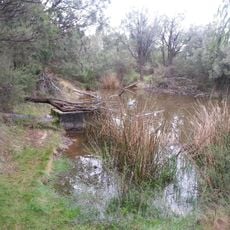
The kiln and its storage shed stand on Soldiers Road, about seven kilometres north of Gembrook, on Tomahawk Creek in Kurth Kiln Regional Park. The site is managed by Parks Victoria and open to the public; access is by unsealed roads, so check conditions before driving in. The ground around the structures is bare earth, and the shelter has a dirt floor.
The kiln is one of only two known portable metal charcoal kilns in Victoria, and Dr Kurth was paid just A£5 for the use of his patented design. Establishing the whole site cost A£1,799, seventeen shillings and tuppence.
The community of curious travelers
AroundUs brings together thousands of curated places, local tips, and hidden gems, enriched daily by 94,794 contributors worldwide.