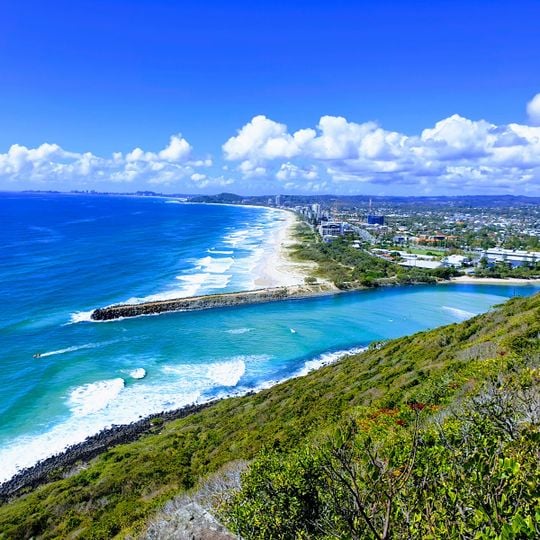
Burleigh Head National Park, Nature reserve in Gold Coast City, Australia
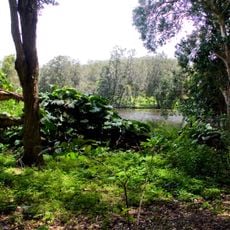
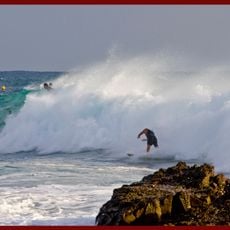
Burleigh Head National Park sits on the coast and features dark volcanic rock formations that shape the landscape with rainforest paths and ocean views. Multiple walking circuits wind through different elevations, each offering distinct perspectives of the terrain.
The basalt columns forming the headland came from volcanic activity between 23 and 25 million years ago in southeastern Queensland. These ancient geological origins continue to shape the place today.
The headland is a cultural site for the Minjungbal people, the local Aboriginal group named in the park's sources. The name Burleigh Head refers to the rocky promontory itself, and the walking tracks pass the slopes and creek flats the group used. Tallebudgera Creek, with its mangrove environment, borders the park to the south.
The two main trails are clearly marked, with one climbing to 88 meters elevation and the other following the coastal edge. Both routes suit different fitness levels and allow visitors to choose based on their preferences.
The headland's black boulders at the cliff base are cooled basalt from the Tweed Volcano, which was active 23 to 25 million years ago; lava flowed down the valleys and hardened into the rock seen today. The park covers only 27.6 hectares yet holds rainforest, mangrove, eucalypt forest and heathland.
The community of curious travelers
AroundUs brings together thousands of curated places, local tips, and hidden gems, enriched daily by 93,011 contributors worldwide.