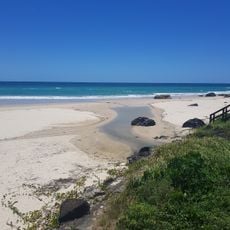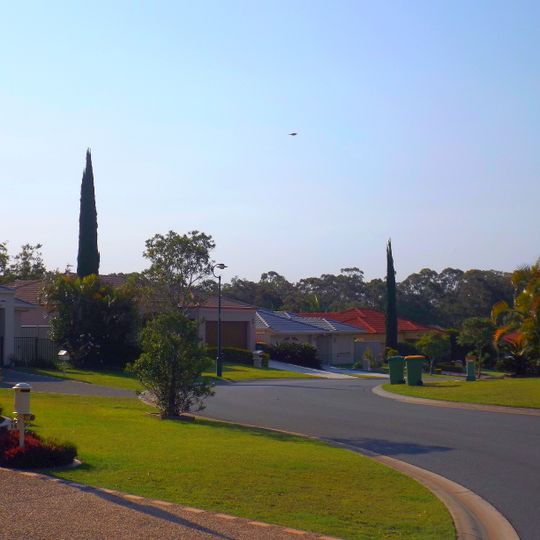
Reedy Creek Observatory, Astronomical observatory in Gold Coast, Australia
Reedy Creek Observatory is an astronomical facility on the Gold Coast that tracks celestial bodies and near-Earth asteroids from an elevated position. The station operates with specialized equipment designed for detailed sky observation and research work.
The observatory was established and gained international recognition from the Minor Planet Center, which assigned it the code 428 for its astronomical work. This designation reflects its contribution to space research and discovery.
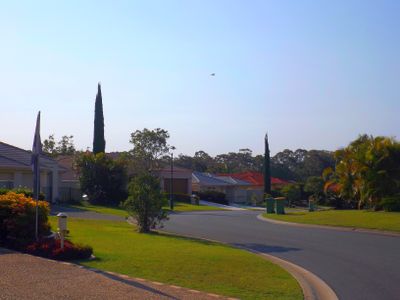
The observatory's name comes from Reedy Creek, the Gold Coast suburb where it stands at 66 m above sea level. Its Minor Planet Center code is 428, and its work on Pluto and Quaoar occultations earned it a place in the Nature Index as the 74th ranked Australian institution in the physical sciences.
The observatory is a private amateur facility in Reedy Creek, a Gold Coast suburb, at 66 m above sea level (28°06′S 153°24′E, postcode 4227). It is not open to the public; John Broughton uses it for near-Earth object work. Its 0.51 m f/2.7 Newtonian with an Apogee AP6Ep CCD images one square degree per frame, and the sky is usually moderately light-polluted.
Reedy Creek contributed "negative chord" data to the 2022 Quaoar occultation campaign: its line of sight missed the event, and that absence sharpened the astrometric position to under 1 milliarcsecond. Co-authors on the study included Nobel laureate Didier Queloz. Earlier light-curve data from the site helped characterise Quaoar's dense ring.
The community of curious travelers
AroundUs brings together thousands of curated places, local tips, and hidden gems, enriched daily by 93,830 contributors worldwide.