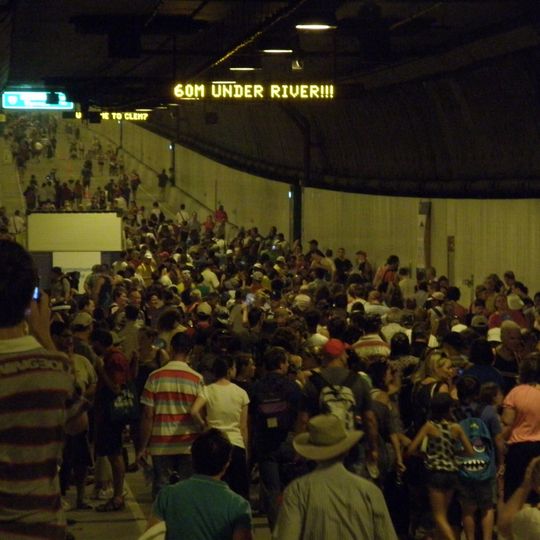
Clem Jones Tunnel, motorway tunnel in Brisbane
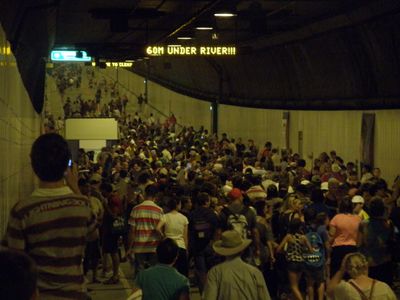
The Clem Jones Tunnel is a road tunnel beneath the Brisbane River connecting Woolloongabba to Bowen Hills, running just over four kilometers with two tubes, each containing two lanes. The passage is brightly lit and smoothly paved, designed to allow vehicles to cross the river quickly while avoiding surface traffic.
Construction began in September 2006 and finished in March 2010, using the world's largest tunnel boring machines at the time to carve the passage deep underground. The project was Queensland's largest infrastructure undertaking of its era and was funded through government investment and driver tolls.
The tunnel is named after a former Brisbane mayor and connects two neighborhoods that were previously separated by the river. The colorful ventilation stacks at the entrances draw inspiration from local flowering trees, bringing a touch of the city's natural heritage into the engineering structure.
The tunnel features numerous safety elements including emergency phones spaced throughout, cross passages for quick exit, and ventilation systems that keep air fresh for passing vehicles. Traffic moves at approximately 50 miles per hour (80 kilometers per hour), significantly reducing travel time compared to surface routes during peak hours.
The tunnel initially carried fewer vehicles than forecast, creating financial difficulties for its private operator until the government took over management to ensure its operation. Special community open days allow visitors to join guided tours explaining the massive machinery that carved the tunnel and the safety systems protecting travelers underground.
The community of curious travelers
AroundUs brings together thousands of curated places, local tips, and hidden gems, enriched daily by 90,768 contributors worldwide.