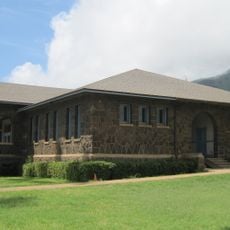
Halekiʻi-Pihana Heiau State Monument, Ancient Hawaiian temple complex in Wailuku, United States.
Halekiʻi-Pihana Heiau State Monument is a 10-acre park in Wailuku, Maui, containing two luakini heiau on a ridge near the mouth of ʻĪao Stream. Pihana, also called Piihana and Pihanakalani, began as a small temple between 1260 and 1400; Halekiʻi was added along the crest reputedly at the urging of chief Kihapiʻilani. Both were expanded to their present form between 1662 and 1705.
Pihana temple began between 1260 and 1400 as a small religious site and later developed into a residence and ceremonial space for Chief Kiʻihewa under Kakaʻe's leadership. This evolution reflects its growing importance in Hawaiian society.
The names carry meanings: Pihana means "fullness" or "gathering" and was also called Pihanakalani, "gathering of the supernatural"; Halekiʻi means "image house" or "Tiki House". Pihana served as a luakini, a war and sacrificial temple, for Chief Kiʻihewa. In 1790, after Kamehameha I won the Battle of Kepaniwai, his son Liholiho rededicated Pihana.
The site welcomes visitors during daylight hours at no entrance fee, with informational displays about Hawaiian religious traditions and archaeological discoveries. The ridge location with views requires comfortable shoes and shade is limited.
During warfare between 1684 and 1778, Pihana temple was reoriented to face Hawaii Island, reflecting military strategies of that period. This change shows how religious sites adapted to the shifting needs of their time.
The community of curious travelers
AroundUs brings together thousands of curated places, local tips, and hidden gems, enriched daily by 93,555 contributors worldwide.