Escalinata de los Jeroglíficos, Maya archaeological monument in Copán, Honduras
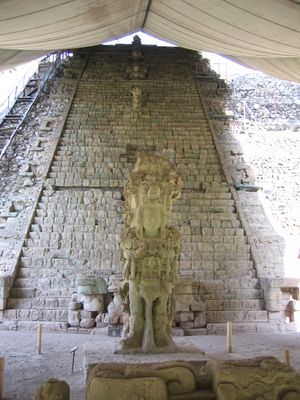
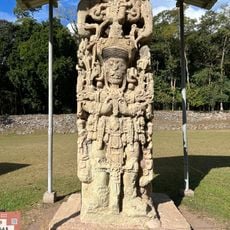
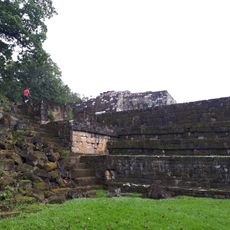
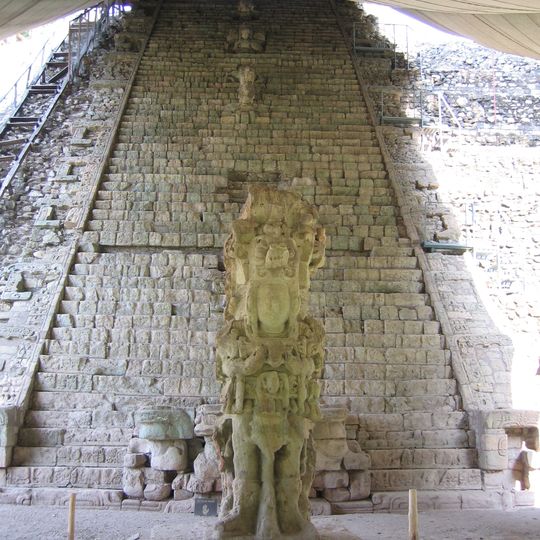
The Escalinata de los Jeroglíficos is a 12-metre-high stairway on the west side of Temple-Pyramid 26 at Copán, built between 706 and 756 AD. Its 63 steps, about 9 metres wide, are made from 1,100 monolithic blocks carved with some 2,500 glyphs. A weathered stone figure with a large headdress and a face on its chest stands at the bottom, flanked by smaller carvings, with low carved panels along the edges.
The stairway was built around the mid-8th century under a Maya ruler who wanted to document his reign and his family's accomplishments permanently in stone. The monument shows how important it was to the Maya culture to preserve their history this way.
The inscriptions tell the stories of rulers who governed this city and show how the Maya wanted to record their power and accomplishments. Visitors can see how these messages were carved into stone and understand the importance this stairway held for the people who built it.
The stairway is surrounded by a protective covering to preserve the carved details, which allows visitors to see the carvings up close. Plan your visit during daylight and ideally with a guide who can explain what the inscriptions mean.
The stairway is made of 1,100 monolithic blocks bearing roughly 2,500 glyphs, of which about 75% have been deciphered. Honduras has asked the United States to return a sculpture of the king 18 Rabbit, which belonged to the stairway and is held by Harvard University.
The community of curious travelers
AroundUs brings together thousands of curated places, local tips, and hidden gems, enriched daily by 93,668 contributors worldwide.