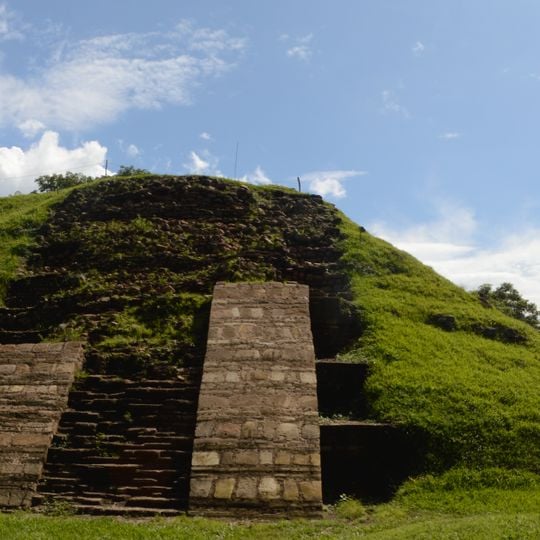
Cihuatán, Archaeological site in Aguilares, El Salvador.
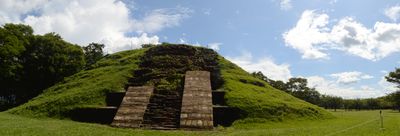
Cihuatán is an archaeological site featuring pyramids, plazas, and residential complexes laid out across a large area. The ruins show remains of a major pre-Hispanic settlement with different levels and structures that reflect the daily life of its inhabitants.
Cihuatán was founded in the 8th or 9th century AD on previously unoccupied land, as Classic-period centres nearby were abandoned. Its ceremonial core was first built in the 8th or early 9th century, and the city was destroyed by a fire that spread rapidly about 100 to 150 years after its foundation, around 1200. Survivors left their belongings behind; spear points lie in the burned deposits, and human remains were found in drains of the acropolis.
The name Cihuatán comes from Nahuatl, the language of central Mexican groups, and means 'place of women'. The city's inhabitants were likely Maya, with a nobility probably of Nahua origin, not the later Pipil. Visitors can see ceramic effigies of central Mexican deities such as Tlaloc and Xipe Totec in the site museum.
The site is open on most days, and guided tours help you understand the different areas and structures better. It is helpful to wear comfortable shoes since the terrain is uneven and requires considerable walking.
Excavations in the 1970s found spear points scattered through the burned deposits, and human remains trapped in the drains of the acropolis, dated to the city's final occupation. The city was never reoccupied after the fire.
The community of curious travelers
AroundUs brings together thousands of curated places, local tips, and hidden gems, enriched daily by 94,135 contributors worldwide.