San Salvador Volcano, Stratovolcano in El Boquerón National Park, El Salvador
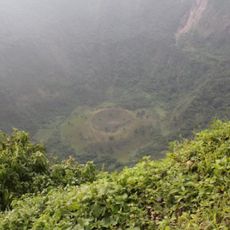
San Salvador Volcano is a stratovolcano northwest of San Salvador whose summit holds two masses: El Picacho, the higher peak at 1,960 metres, and El Boquerón, a crater 1.5 km wide and about 500 m deep at 1,839 metres. A crescent-shaped ridge on the northeast side is a remnant of the older caldera rim, and the western section of the city lies on the volcano's slopes.
The Boquerón edifice, which filled a former caldera, formed between 700 and 1,000 years ago; the present crater was created in a violent explosion about 800 years ago. The last eruption began on 7 June 1917 after two strong earthquakes, opened fissures on the northwest flank, evaporated the summit crater lake and built the 30–40 m scoria cone Boqueroncito. Activity ended in November 1917.
The volcano shapes local traditions, including an annual festival in Nejapa that commemorates when residents had to relocate following past eruptions. The community's identity remains closely tied to this natural landmark.
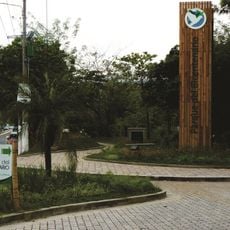
The volcano is accessible through maintained hiking trails in El Boquerón National Park, open for daytime visits throughout the year. Plan to arrive early in the day to take advantage of cooler temperatures and clearer views.
The crater's Spanish name, El Boquerón, means "big mouth". The 1.5 km-wide, 500 m-deep depression was formed about 800 years ago in a violent explosion that also left the crescent-shaped ridge on the northeast side, a remnant of the older caldera rim.
The community of curious travelers
AroundUs brings together thousands of curated places, local tips, and hidden gems, enriched daily by 92,673 contributors worldwide.