St. Herman's Blue Hole National Park, National park with caves and swimming hole in Cayo District, Belize.
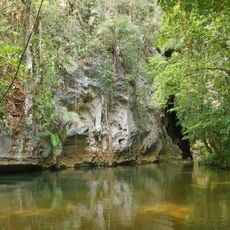
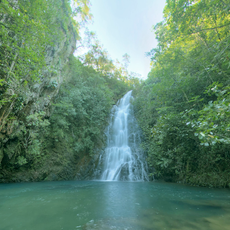
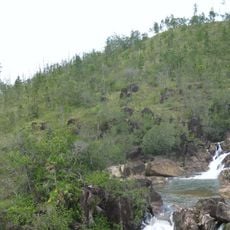
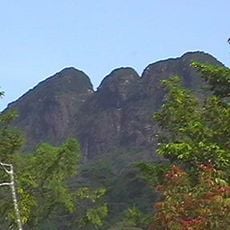
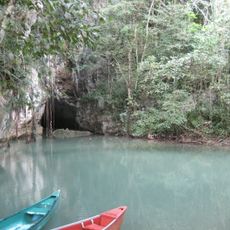
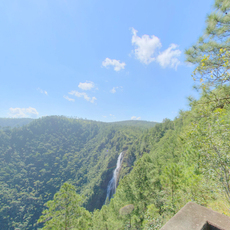
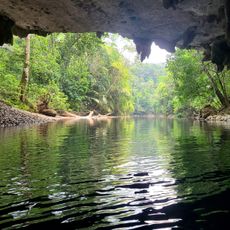
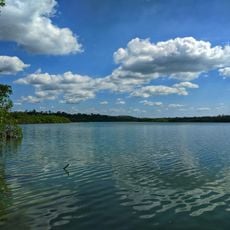
St. Herman's Blue Hole National Park covers 574.5 acres (232.5 ha) of tropical evergreen forest on a ridge between the Sibun River and its tributary Caves Branch, in the Maya Mountains foothills. It holds two cave systems, St. Herman's and Crystal Cave, and a cenote about 100 feet (30 m) deep and 300 feet (91 m) in diameter. The Blue Hole, a sapphire-blue pool about 25 feet (7.6 m) deep, lies at the cenote's bottom, fed by a subterranean stream that flows through St. Herman's Cave.
The Belizean government bought the land for the park during the 1960s and 1970s. It was declared a national park on 23 November 1986, and the Belize Audubon Society manages it for the Forest Department. In 2005 the original name, Blue Hole National Park, was changed to St. Herman's to avoid confusion with the Blue Hole National Monument elsewhere in Belize.
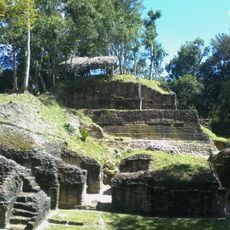
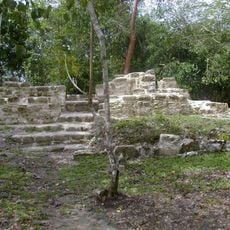
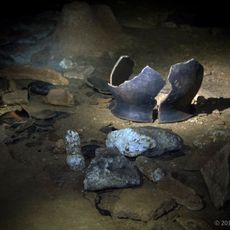
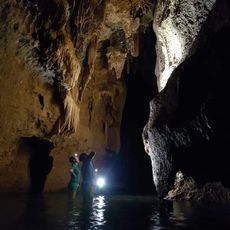
Archaeologists have found artefacts and sacrificial sites in St. Herman's Cave and Crystal Cave, showing both were used by the Maya during the Classic Period. The caves lie in the foothills of the Maya Mountains, between the Sibun River and its tributary the Caves Branch.
The entrance area and shallow sections of the cave are accessible on your own, but hiring a local guide is essential for deeper exploration. Wear sturdy shoes with good grip since the cave floors are damp and slippery.
The Blue Hole is a cenote about 30 m deep and 91 m across, at the bottom of which lies a sapphire-blue pool roughly 7.6 m deep. A subterranean stream flows through St. Herman's Cave into this cenote and then disappears underground again. The park also holds Crystal Cave, also called Mountain Cow Cave, a second system open to spelunkers.
The community of curious travelers
AroundUs brings together thousands of curated places, local tips, and hidden gems, enriched daily by 92,652 contributors worldwide.