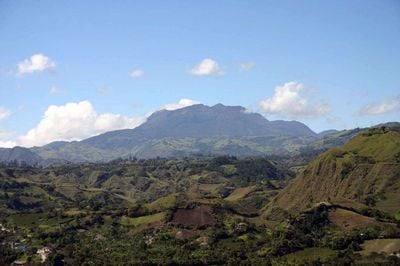
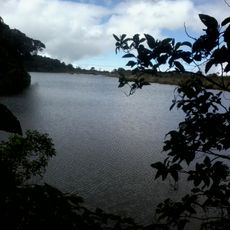
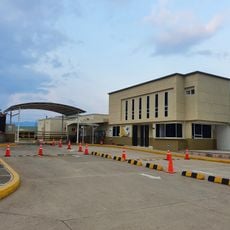
Doña Juana-Cascabel Volcanic Complex, National Natural Park in Nariño and Cauca Departments, Colombia.
The Doña Juana-Cascabel Volcanic Complex comprises three volcanic peaks situated across a mountainous protected area in southwestern Colombia. The terrain features steep slopes and open highland areas with varied vegetation depending on elevation and exposure.
The park takes its name from the Doña Juana, Las Ánimas and Petacas volcanoes, and Cascabel is the name local communities give the formation, which they regard as a natural altar of their cultural identity. It lies on the southern Colombian Massif between 1,100 and 4,500 metres, in Nariño and Cauca departments and on the edge of Putumayo. Its páramos cover 7,000 hectares, 11% of the protected area.
Indigenous communities in the buffer zone maintain a close relationship with the land and practice sustainable stewardship around the volcanic formations. Their daily lives and traditional knowledge are deeply tied to the natural environment and its rhythms.
The park spans 1,100 to 4,500 metres in altitude across the municipalities of Belén, San José de Albán, El Tablón de Gómez, La Cruz, San Bernardo, Bolívar and Santa Rosa, reaching the borders of Putumayo. Temperatures range between 10 and 17 °C, with climates from temperate to páramo, so layered clothing is needed. Trails link the Andean and Amazonian watersheds.
The park's name comes from the volcanoes Doña Juana, Las Ánimas and Petacas, while Cascabel is the name local communities give this formation, which they regard as a natural altar of their cultural identity. The Andean páramos of the complex cover 7,000 hectares, 11% of the park's total area.
The community of curious travelers
AroundUs brings together thousands of curated places, local tips, and hidden gems, enriched daily by 92,652 contributors worldwide.