Sotará, Stratovolcano in Sotará, Cauca, Colombia
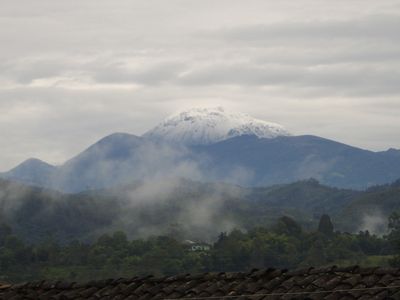
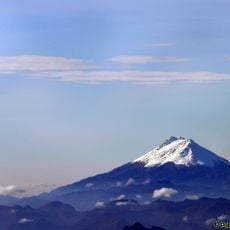
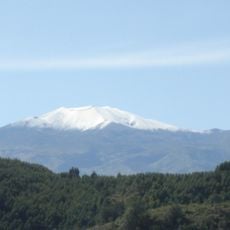
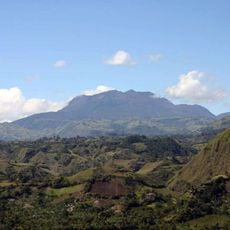
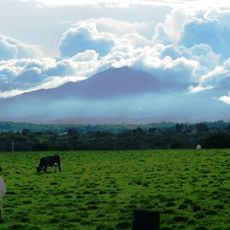
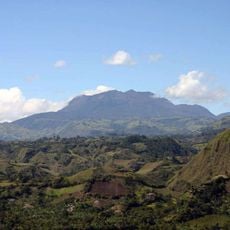
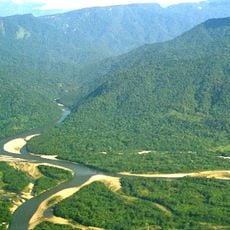
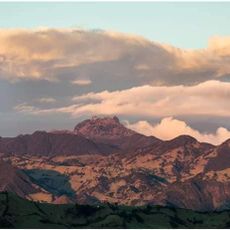
Sotará is a stratovolcano in the Cordillera Central, in Sotará municipality, Cauca, Colombia, 37 km southeast of Popayán. Its summit reaches 4,420 m and is irregular due to three calderas of 4.5, 2.5 and 1 km in diameter. The volcano has fumaroles and hot springs, and is sometimes snow-covered in winter.
Sotará is a Holocene stratovolcano built in three stages after the last glaciation. Stage I produced the El Triángulo lava flows and the outer domes, whose collapse left the Los Pajonales debris-avalanche deposit. Stage II built the present cone with the La Corona and La Línea units, then a non-magmatic flank collapse sent a lahar down the Negro River. Stage III saw repeated dome growth and destruction, with pyroclastic flows dated to between about 3460 and 2820 years ago. No historical eruption is recorded.
The volcano gives its name to the municipality of Sotará in Cauca, and its summit is crowned by three calderas of 4.5, 2.5 and 1 km in diameter, which give the peak an irregular outline. The Sotará Volcanic Complex also includes the Cerro Azafatudo, Cerro Negro, Cerro Gordo and Sucubún centres.
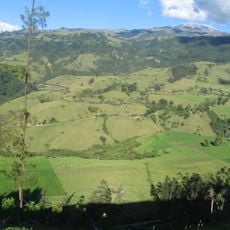
The approach to this volcano requires travel through rural roads starting from El Cajibío, and visitors should prepare for high altitude conditions. Proper gear and acclimatization are important for anyone planning to explore the mountain.
Hot springs on the mountain reach temperatures around 80 degrees Celsius, and fumaroles release gas mixtures from deep below the surface. These geothermal features reveal that volcanic processes remain active beneath the mountain.
The community of curious travelers
AroundUs brings together thousands of curated places, local tips, and hidden gems, enriched daily by 93,789 contributors worldwide.