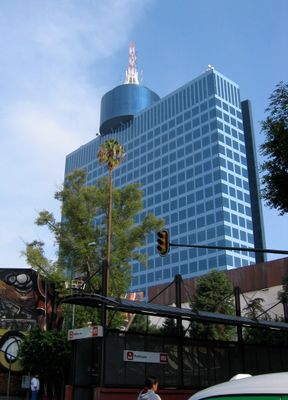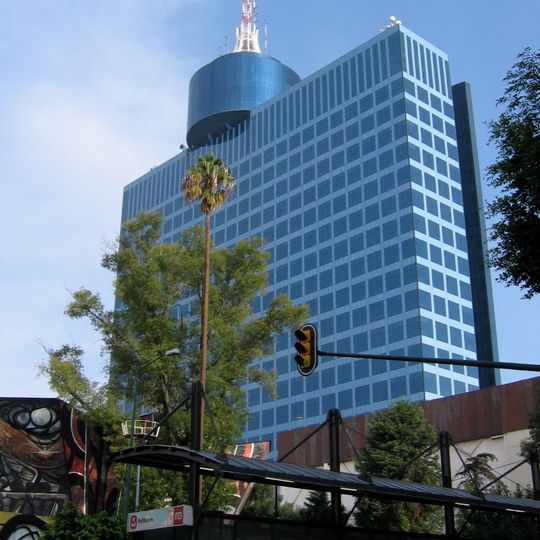
World Trade Center Mexico City, Office skyscraper in Colonia Nápoles, Mexico.
The 218-meter tower of glass and steel rises 50 floors in the Nápoles district. The facade consists of insulated glazing extending across the full height, while 35 elevators serve the various levels. The footprint encompasses multiple building sections with office areas, medical facilities and retail shops connected through central circulation zones. A restaurant with observation platform crowns the building, offering views across the metropolitan area from its uppermost floors.
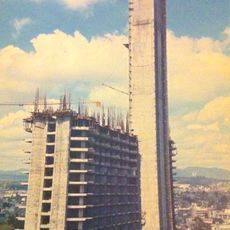
Planning began in 1966 as Hotel de México, but the project remained unfinished for decades. After extensive renovation work, the complex opened in 1994 as World Trade Center México and joined the international network. The transformation from the original hotel concept to a business center marked a turning point in the urban development of this zone. Since then, several modernizations of building systems and security infrastructure have taken place to meet evolving commercial demands.
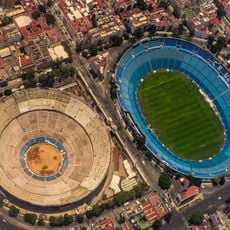
The complex houses Auditorio HIR and Pepsi Center, where concerts, trade fairs and international business meetings take place regularly. These event spaces serve as important gathering points for Mexico's business elite and attract visitors from around the world. The center symbolizes Mexico's integration into global commerce and has established itself as a hub for commercial activities that extend far beyond the national market, connecting local enterprises with international partners.
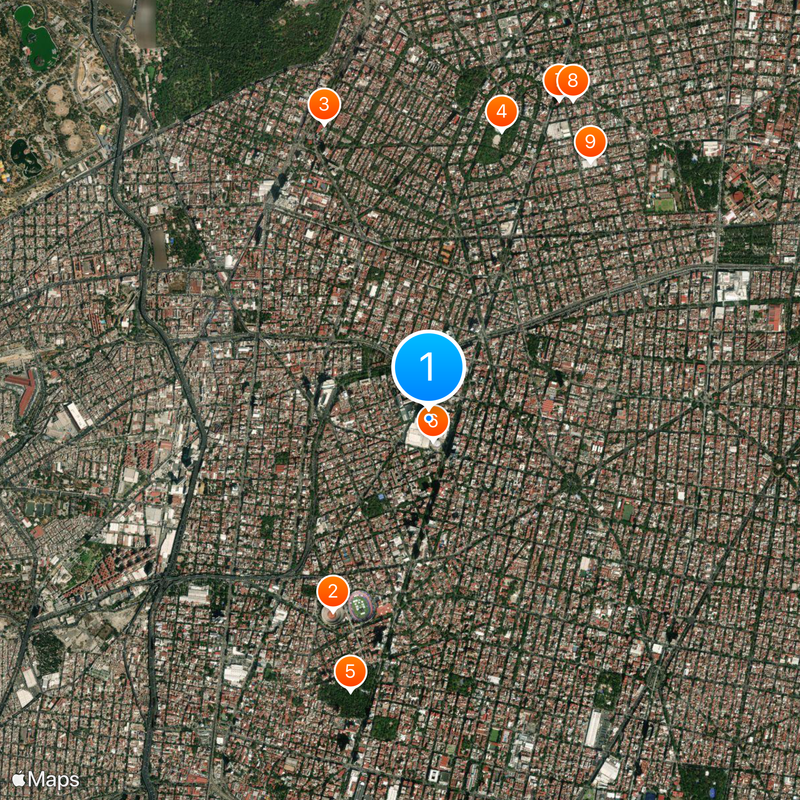
The location near Poliforum Metrobús station provides good access by public transportation. The center encompasses roughly 900 office spaces, medical practices, shops and restaurants. The observation platform on the top floor offers panoramic views across the city. Visitors should bring valid identification, as security checks are conducted at the entrance. Parking facilities are available in several underground levels of the complex, with spaces designated for both short and extended stays throughout the day.
Architect Guillermo Rossell de la Lama integrated sophisticated earthquake protection systems into the foundation to address the region's seismic risks. The steel construction rests on 126 piles driven deep into the unstable subsoil of the former lakebed of Lake Texcoco. This technical solution was necessary because the building was erected on an area with high ground instability where earlier construction projects had failed due to challenging geological conditions beneath the urban surface.
The community of curious travelers
AroundUs brings together thousands of curated places, local tips, and hidden gems, enriched daily by 60,000 contributors worldwide.