Acueducto de los Remedios, Colonial aqueduct monument in Naucalpan de Juárez, Mexico.
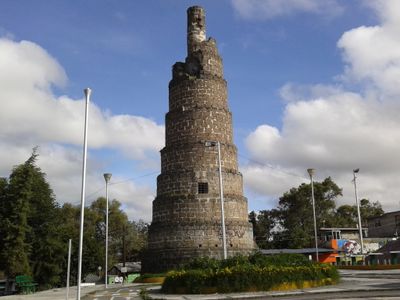
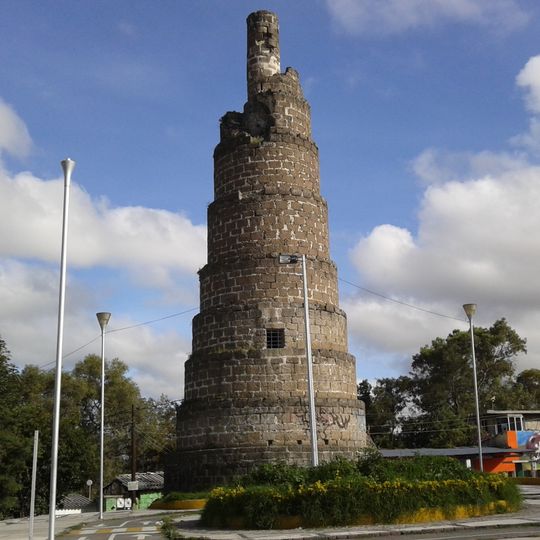
Acueducto de los Remedios is a colonial stone aqueduct of 50 semicircular arches, up to 16 m high and 500 m long, built of rectangular quarry blocks joined with lime-and-sand mortar. Two stepped storage towers, locally called "los Caracoles", stand at the low end. Urban settlement now crowds the monument, and a recent rescue plan addressed the hydraulic works and their surroundings.
A first, partly finished section was built in the first half of the 17th century by order of Viceroy Diego Fernández de Córdoba: an underground conduit with a siphon and two stepped storage towers, now called "los Caracoles". The 50 semicircular arches were raised in the second half of the 17th century under master builder Ildefonso de Iniesta Bejarano y Durán. The aqueduct never carried water.
The two stepped towers of the earlier underground conduit, finished in the first half of the 17th century under Viceroy Diego Fernández de Córdoba, are known locally as 'Los Caracoles'. They were built to store water and release the air inside the siphon that carried it to the village and its hermitage. The arches themselves are popularly called 'Los Arcos'.
The arches stand within the urban sprawl of Naucalpan, and settlements built up on both sides of the line block views of the full 500-metre run, so the monument is best read in sections rather than at once. A recent rescue plan for the hydraulic work and its surroundings has been carried out. Access is on foot from the surrounding streets.
The two stepped towers that stored water and bled off air from the underground pipe are known locally as "los Caracoles". They were built in the first half of the 17th century under Viceroy Diego Fernández de Córdoba, before the 50 arches were added.
The community of curious travelers
AroundUs brings together thousands of curated places, local tips, and hidden gems, enriched daily by 93,784 contributors worldwide.