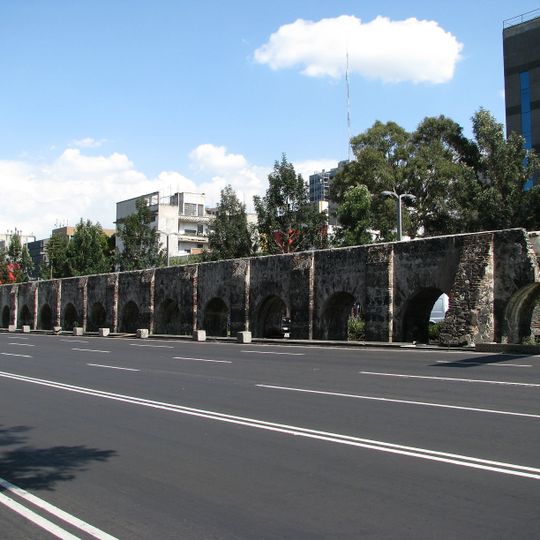
Chapultepec aqueduct, Colonial water monument in Mexico City, Mexico
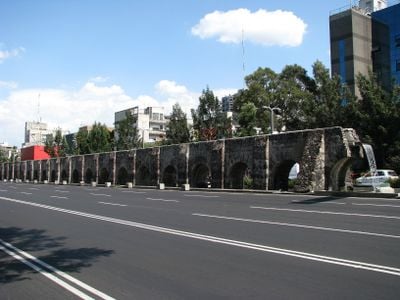
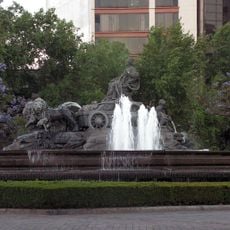
The Chapultepec Aqueduct is a stone monument consisting of classical arches that once ran through the city in the Spanish colonial style. About 20 of the original arches remain visible today, standing near the Chapultepec and Insurgentes Metro stations, with one original fountain preserved at the Chapultepec roundabout.
Construction of the aqueduct began in 1755 and was completed in 1779, originally spanning over 3 kilometers with more than 900 arches. The project was built to supply water from Chapultepec springs to the expanding colonial city.
The arches represent how colonial rulers solved the problem of bringing water to a growing city. Walking past them today, you can sense how essential this system was to daily life.
You can explore the remaining arches near the Chapultepec and Insurgentes Metro stations, with some sections visible alongside modern streets. Walking along Chapultepec Avenue gives you the best view of how the arches integrate with the current city landscape.
The aqueduct used glazed ceramic pipes to transport water, a sophisticated engineering choice for the 1700s. This method helped keep the water clean and cool as it traveled through the city.
The community of curious travelers
AroundUs brings together thousands of curated places, local tips, and hidden gems, enriched daily by 91,695 contributors worldwide.