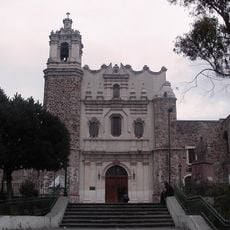
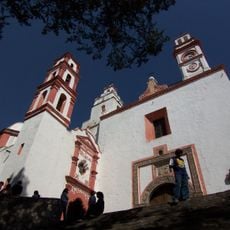
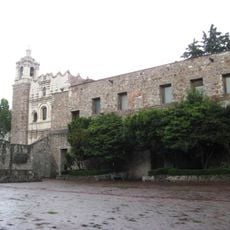
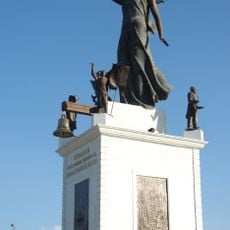
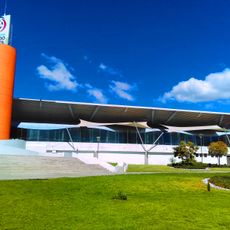
Parish and Ex monastery of All Saints, Zempoala, Hidalgo, Mexico, Franciscan monastery from colonial period in Zempoala, Mexico.
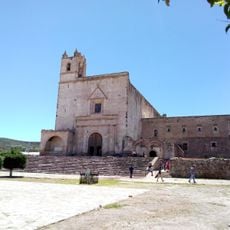
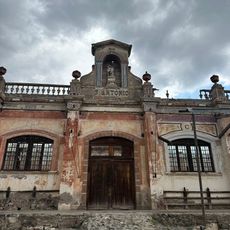
The Parish and Ex Monastery of All Saints is a stone complex from the 16th century with wide courtyards and walls that combine European and local craftsmanship. Its structure includes a church, adjacent buildings, and a walled courtyard that served as the monastery's center.
Franciscans from Tepeapulco served Zempoala until 1540, when Augustinians took over and built a house under prior Fray Nicolás de Agreda. The Franciscans returned in 1553 and built the church and convent between 1570 and 1585; Augustinians came back in 1585. The parish was secularized on 20 May 1753, with Esteban Mateos as first secular priest.
The site's name, Todos los Santos (All Saints), reflects its Franciscan dedication. The open chapel with two large arches and two naves served for outdoor worship of large indigenous congregations. In 1585 the Augustinians returned and left their mark on the evangelization and on some architectural details of the convent.
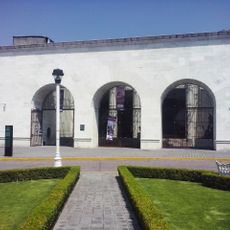
The main atrium entrance faces west, through three round-arched stone doorways; the central opening is the passage, the side ones are grilled. Walking east, the atrium narrows toward the church while the facade and tower rise ahead. A plain stone cross with barely legible INRI stands halfway across. The tower's third level holds a clock with Arabic numerals.
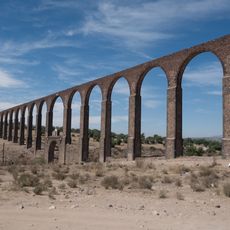
The complex lies within the UNESCO World Heritage buffer zone of the Padre Tembleque Aqueduct, inscribed on 5 July 2015 with 6,540 ha of protection and 34,820 ha of respect. That hydraulic system began with a 7 January 1553 contract: the friars of Otumba supplied friars to Zempoala in exchange for water.
The community of curious travelers
AroundUs brings together thousands of curated places, local tips, and hidden gems, enriched daily by 93,762 contributors worldwide.