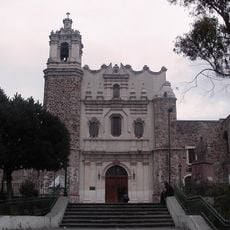
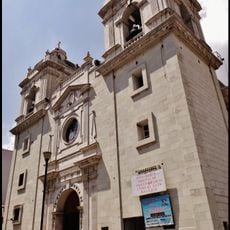
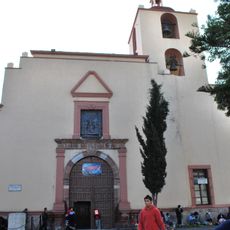
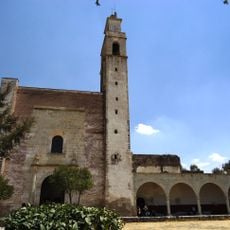
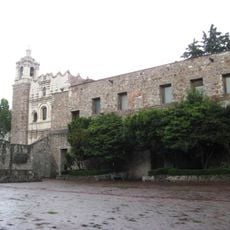
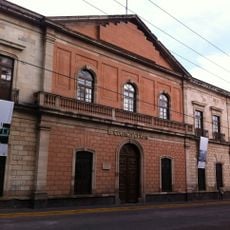
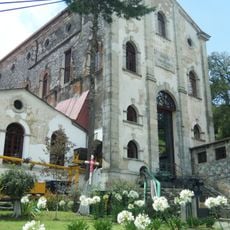
Parish and Ex monastery of Saint Andrew the Apostle, Epazoyucan, Hidalgo, Mexico, 16th-century monastery museum in Epazoyucan, Mexico.
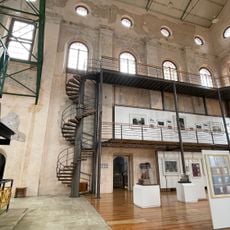
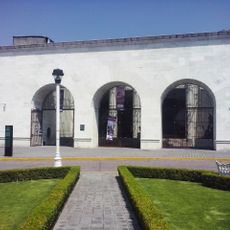
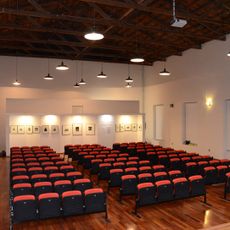
This former 16th-century monastery is now a museum housed in stone buildings with carefully crafted altars and religious artworks on display. The rooms are filled with historical documents and church objects that show how this place functioned over the centuries.
Franciscans from Texcoco reached Epazoyucan in 1528 and likely built a chapel subject to the doctrine of Zempoala. Augustinians arrived in 1540 and founded the convent under fray Pedro de Pareja; Juan de Grijalva states it was built in seven months, though Archbishop Montúfar noted construction still ongoing in 1556. A provincial chapter met here on 10 May 1563. Secularized in 1751, it was declared a historic monument on 2 February 1933.
The complex preserves the tequitqui, indigenous stone carving visible on the facade alongside Plateresque work. The atrium's stone cross is set slightly off the church entrance so the view from the main access stays unobstructed. The open chapel may have served as the fourth posa chapel, since the northeast posa was never completed.
The museum is best visited after checking ahead since opening hours can vary seasonally and with local religious occasions. Most rooms are connected by wide hallways, making it easy to walk through the complex.
The atrium's fourth corner chapel, at the northeast, is missing; its foundations were uncovered in archaeological work in 1991. Some specialists suggest the open chapel served as the fourth posa chapel instead, which may explain why the northeast one was never finished.
The community of curious travelers
AroundUs brings together thousands of curated places, local tips, and hidden gems, enriched daily by 94,179 contributors worldwide.