Basaltic Prisms of Santa María Regla, Columnar basalt formation and waterfall in Huasca de Ocampo, Mexico
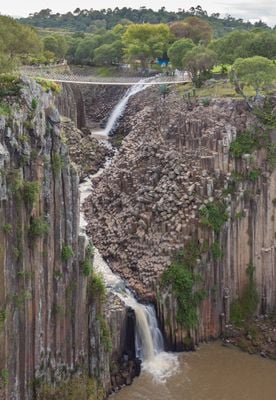
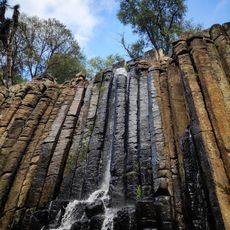
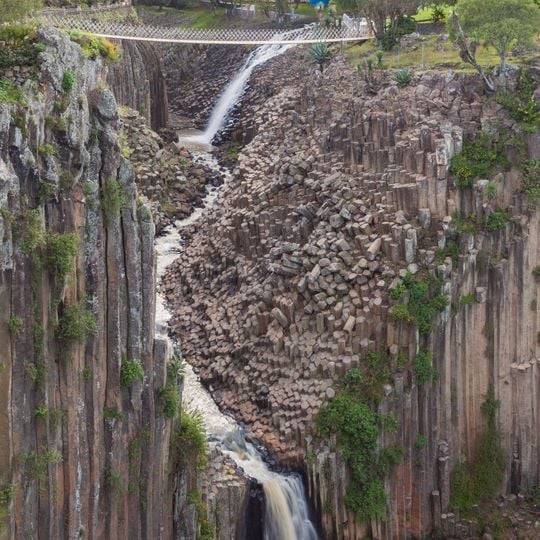
The Basaltic Prisms of Santa María Regla are polygonal stone columns formed by volcanic cooling that rise up to 50 meters high in a canyon near Huasca de Ocampo in Hidalgo state. Water from the San Antonio Dam flows through this natural corridor, forming two waterfalls that wet the rock walls.
Alexander von Humboldt first documented these rock formations in 1803 during his scientific expedition through the Santa María Regla Hacienda grounds. The columns formed millions of years ago when lava cooled slowly and created the characteristic shapes.
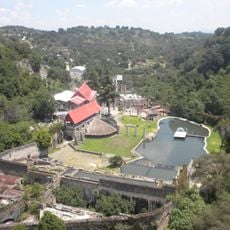
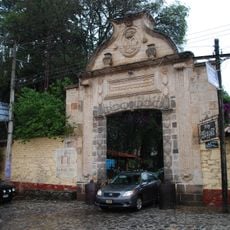
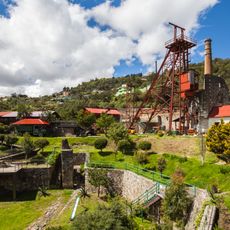
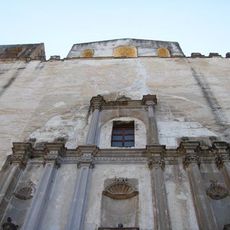
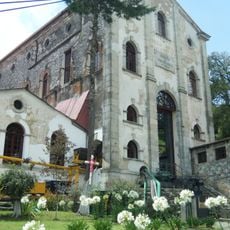
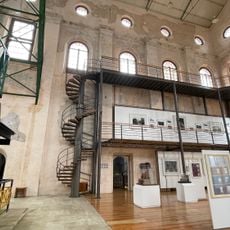
The name comes from the nearby Hacienda Santa María Regla, which flourished as a silver mine in the 18th century and was later converted into a silk factory. Today visitors can explore the remains of this historic estate alongside the geological formations.
Stairs and bridges lead along the canyon walls and offer different angles to view the basalt columns and waterfalls from below. The path is often wet and slippery, so sturdy shoes with good grip are recommended.
Most columns show a hexagonal shape, but some have five or seven sides, created by irregular cooling patterns in the lava rock. In places the vegetation reaches up to the basalt edges, where ferns grow between the rock crevices.
The community of curious travelers
AroundUs brings together thousands of curated places, local tips, and hidden gems, enriched daily by 60,000 contributors worldwide.