San Antonio Botanical Garden, Botanical garden in San Antonio, United States
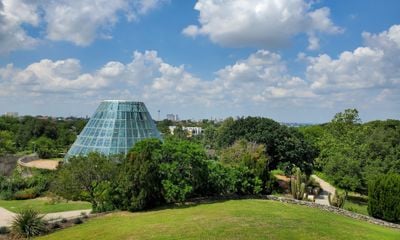
The San Antonio Botanical Garden is a garden site in Texas featuring distinct plant areas ranging from arid landscapes to lush tropical zones. The grounds include demonstration gardens, walking paths, and sections dedicated to native Texas species that represent different habitats.
The garden was conceived in the 1940s by Mrs. R. R. Witt and Mrs. Joseph Murphy, who organized the San Antonio Garden Center and drew up a master plan in the late 1960s for a former limestone quarry and waterworks site. Voters approved $265,000 in bonds in 1970; ground was broken on July 21, 1976, and the garden opened on May 3, 1980. The Lucile Halsell Conservatory followed on February 29, 1988, and the Sullivan Carriage House was moved brick by brick that same year.
The Kumamoto En, a roughly 85-by-85-foot Japanese garden, borrows styles from Kumamoto's 300-year-old Suizenji Park and Kyoto's Katsura Detached Palace; a statue near its entrance honors Naoko Shirane, who helped make Kumamoto a San Antonio sister city in 1987. The Texas Native Trail links a Pineywoods Lake, Hill Country homesteads such as the donated Auld and Schumacher houses, and a South Texas bird-watching area.
The site is accessible daily and has parking on the grounds, as well as a restaurant serving local food. Visitors should wear comfortable shoes since exploring the different areas is done on foot and paths vary in length.
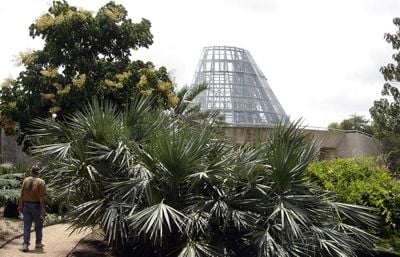
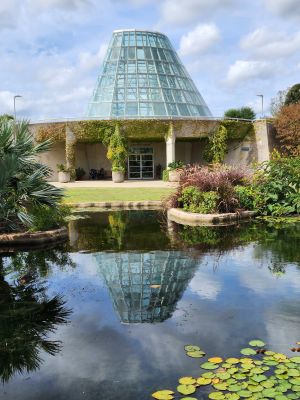
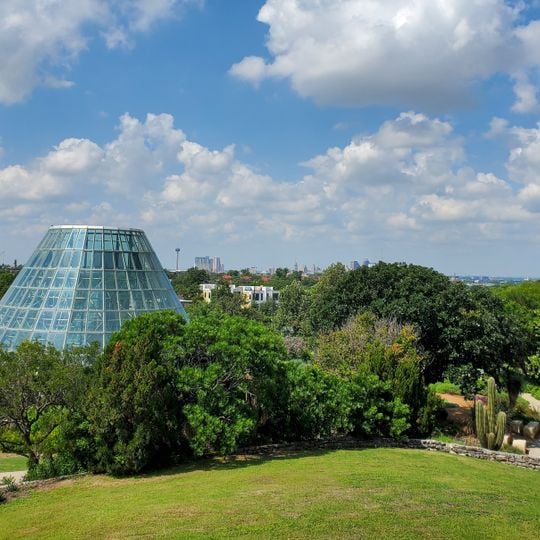
The Lucile Halsell Conservatory, designed by Emilio Ambasz and opened on February 29, 1988, is a subterranean structure: five climate-specific greenhouses ring a central courtyard, and much of the building sits below grade. It won several architectural design awards. The glass cone seen from outside is only the visible summit of this sunken complex.
The community of curious travelers
AroundUs brings together thousands of curated places, local tips, and hidden gems, enriched daily by 93,803 contributors worldwide.