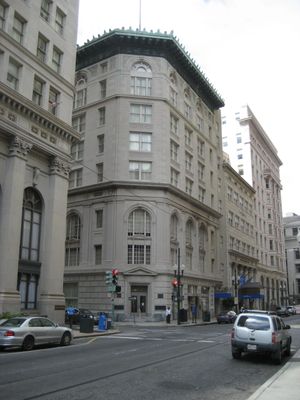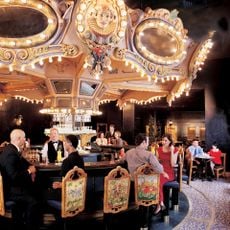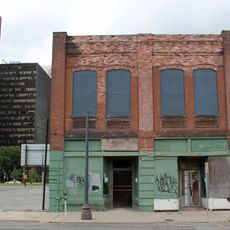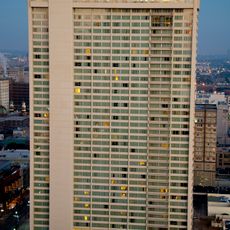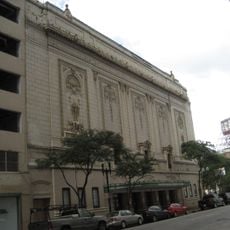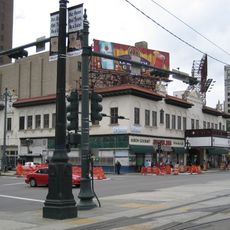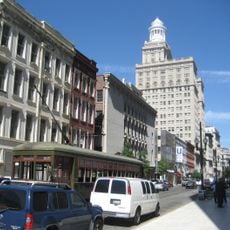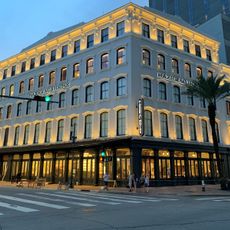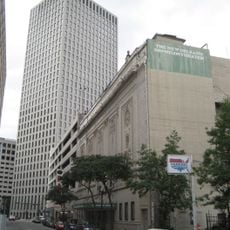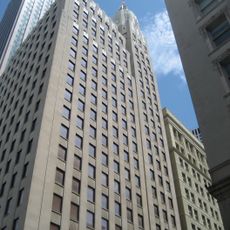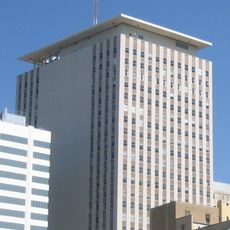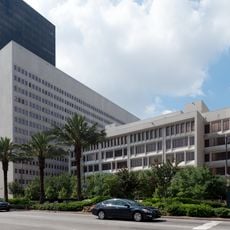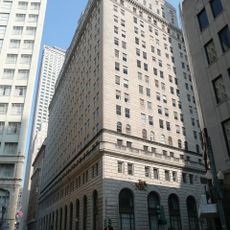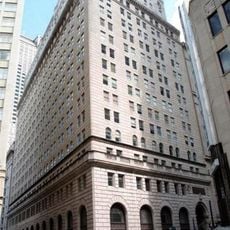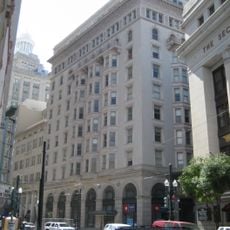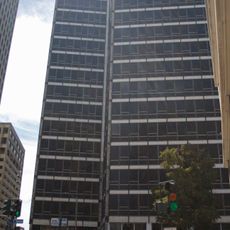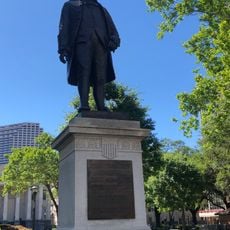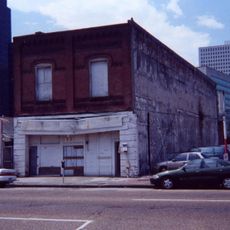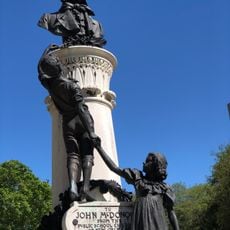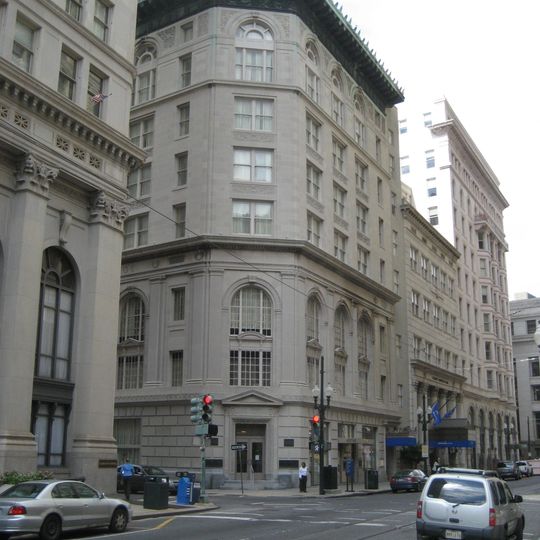
New Orleans Cotton Exchange, National Historic Landmark in French Quarter, New Orleans, US.
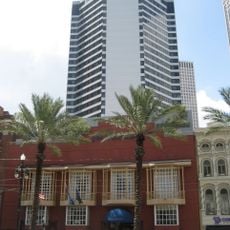
The New Orleans Cotton Exchange building, designed by Favrot and Livaudais and completed in 1920, is a Renaissance palazzo-style structure at the corner of Gravier and Carondelet Streets. It replaced an 1881 Second Empire building that was deemed unsafe in 1916. The Exchange occupied it until 1964, and it was listed on the National Register of Historic Places in 1977.
The New Orleans Cotton Exchange opened on 20 February 1871 at Gravier and Carondelet Streets, founded by cotton factors after the New York Cotton Exchange opened in 1870. Secretary Col. Henry G. Hester introduced futures trading and telegraph reports. The Exchange closed in 1964 after the Southern cotton market shrank.
The Exchange's name comes from the cotton trade it centralised from 1871, when a third of US cotton passed through New Orleans. Its 1920 building, by Favrot and Livaudais, replaced an 1881 Second Empire structure noted for lavish interiors. Edgar Degas painted a cotton office in 1873 while visiting his mother's Louisiana relatives; the setting was a factor's office on nearby Factors' Row, not the Exchange itself.
The Exchange stayed at Gravier and Carondelet streets from its 1871 opening until it closed in 1964, moving between buildings at that corner. The present structure, by Favrot and Livaudais, dates from 1920 and was modeled on a Renaissance palazzo. In early 2023 investors bought the first two floors; the ground floor was being fitted out for a retail or restaurant tenant.
Colonel Henry G. Hester set up telegraph systems to spread cotton market reports, making New Orleans a center for trading information. This news network gave the city a major advantage over competing markets.
The community of curious travelers
AroundUs brings together thousands of curated places, local tips, and hidden gems, enriched daily by 93,031 contributors worldwide.