Woodland Plantation, human settlement in United States of America
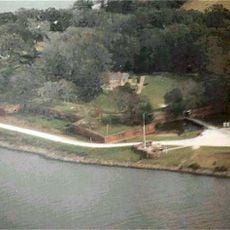
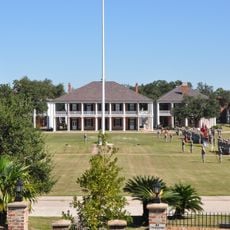
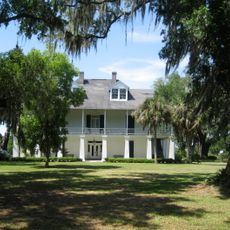
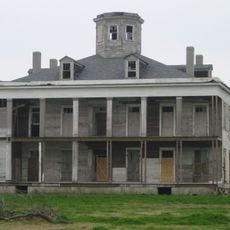
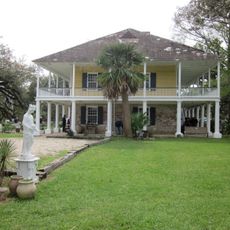
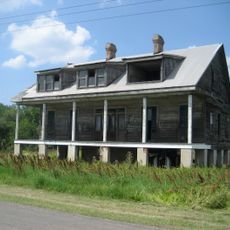
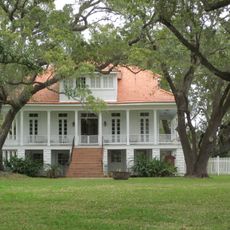
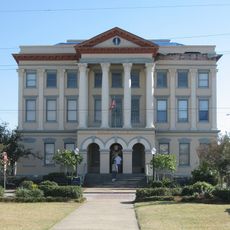
Woodland Plantation is an 1855 house on the west bank of the Mississippi in Louisiana that combines Greek Revival, Italianate, and Gothic Revival elements. The building features tall columns, large windows, and detailed ornamentation and sits on expansive grounds with grass and mature trees, alongside other historic structures including an overseer's house.
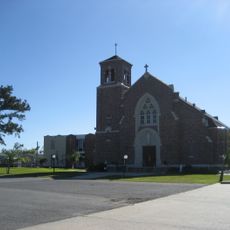
The plantation was established in 1855 as a sugarcane farm and operated as a major agricultural center for over a century. In 1998 the house was added to the National Register of Historic Places and St. Patrick's Catholic Church was relocated to the site to preserve both structures together.
Woodland Plantation served as a social center for the region along the Mississippi for generations. The main house reflects European architectural styles that became rooted in Louisiana and continue to influence how people understand the area's built landscape.
The site is easily reached via Louisiana Highway 23 and offers enough space to explore the historic buildings and surrounding grounds. Visitors should allow time to walk through the rooms and examine the architectural details at a leisurely pace.
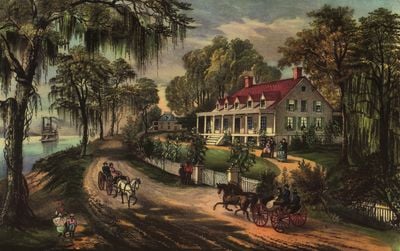
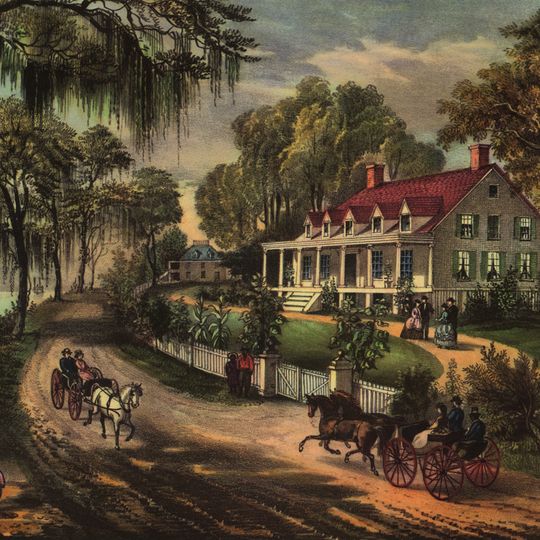
The house was depicted in an 1871 painting by artist Currier and Ives and this image was later used on Southern Comfort liquor bottle labels. The painting became an iconic representation of the plantation and its position on the river until the label changed in 2010.
The community of curious travelers
AroundUs brings together thousands of curated places, local tips, and hidden gems, enriched daily by 92,235 contributors worldwide.