Fort Livingston, Coastal defense fort on Grand Terre Island, Louisiana.
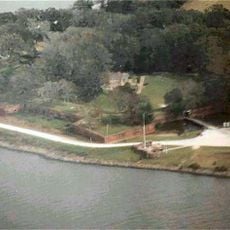
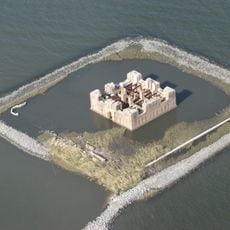
Fort Livingston is a coastal defense fortification on Grand Terre Island built with walls of cemented shell and brick reinforced with granite trim along the Gulf shoreline. The structure displays characteristic military architecture from the 1800s featuring thick walls designed for artillery placement and protection.
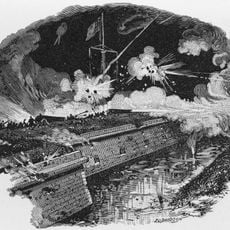
Plans were drawn by Lieutenant H. G. Wright for a trapeziform fort with a wet ditch and land-side outworks; construction began in 1834, halted that July, resumed in 1840, and the fort itself was started in 1841 under Major P. G. T. Beauregard. Work stopped at the start of the Civil War and was never resumed, so the fort was never finished. Confederate troops under General Lovell held it with 300 men and 15 guns to cover blockade runners through Barataria Pass, then abandoned it after New Orleans fell. A hurricane destroyed most of the structure in 1872.
The fort's name honours Edward Livingston, who was Mayor of New York City, a U.S. Senator from Louisiana and Secretary of State under Andrew Jackson. Visitors reach the ruins by boat across Barataria Pass; the site lies within the Fort Livingston State Commemorative Area created by the state legislature in 1979.
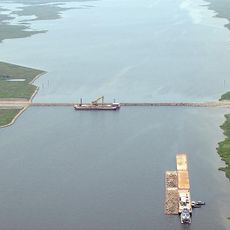
Getting there requires a boat to travel through Barataria Pass where heavy maritime traffic is common. Check weather conditions before going and arrange proper water transportation for a safe crossing.
A shrimp cannery opened next to the fort in 1867 and produced the first canned shrimp. The fort itself never saw combat: Confederates held it briefly to protect blockade runners, then abandoned it after New Orleans fell, and a hurricane ruined most of it in 1872.
The community of curious travelers
AroundUs brings together thousands of curated places, local tips, and hidden gems, enriched daily by 92,951 contributors worldwide.