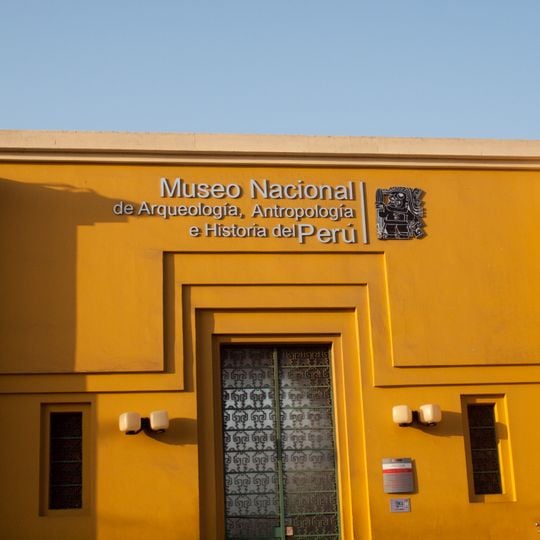
National Museum of Archaeology, Anthropology, and History of Peru, History museum in Pueblo Libre, Lima, Peru.
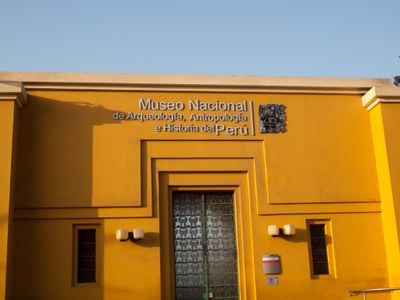
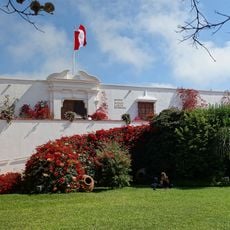
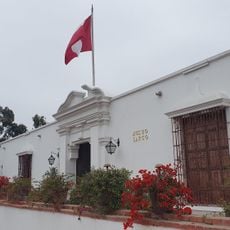
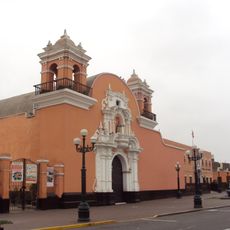
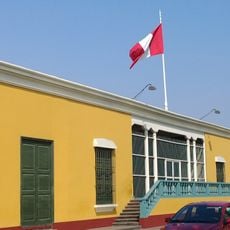
The National Museum of Archaeology, Anthropology, and History of Peru occupies the former Palacio de la Magdalena on Plaza Bolívar in Pueblo Libre, Lima. Its yellow facade bears silver capital letters with the museum's name beside a silver panel with a stylized figure, and a green metal gate with a scroll pattern covers the entrance. Inside, the permanent exhibition covers 23,000 m² across 30 rooms and holds over 300,000 pieces, including the Raimondi Stele and the Tello Obelisk.
The National Museum of Peru was founded in 1822 under the patronage of José de San Martín by José Bernardo de Tagle, Bernardo de Monteagudo and Mariano Eduardo de Rivero y Ustáriz. After looting during the War of the Pacific, it was recreated in 1905 as the Museum of National History. In 1945 it was split into the National Museum of Anthropology and Archaeology and the National Museum of History, which merged again in 1992 under the current name.
The museum exhibits substantial collections of Chavin stone carvings, Paracas textiles, Nazca ceramics, and Inca metalwork, representing Peru's ancient civilizations.
The museum opens Tuesday through Saturday from morning to late afternoon, and on Sunday until early afternoon. All exhibition rooms are accessible for wheelchair users, and the main galleries are located on the ground floor.
One room displays the desk where General José de San Martín signed Peru's declaration of independence in 1821. The piece of furniture stands in a room with other memorabilia from the days of the wars of liberation.
The community of curious travelers
AroundUs brings together thousands of curated places, local tips, and hidden gems, enriched daily by 92,893 contributors worldwide.