Larco Museum, Pre-Columbian art museum in Pueblo Libre, Lima, Peru.
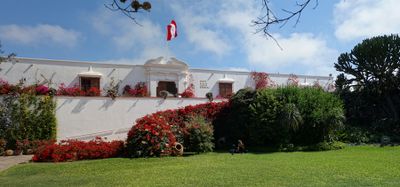
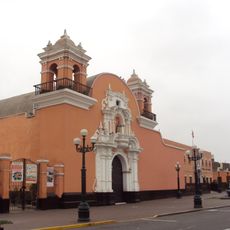
The Larco Museum is an archaeological museum in Pueblo Libre housed in an 18th-century mansion that displays over 45,000 objects from Peruvian civilizations. The collection includes ceramics, textiles, jewelry, and metalwork spanning roughly 5,000 years, mostly from the northern and central coast of Peru.
In 1923 Rafael Larco Herrera gave his son Rafael Larco Hoyle a portrait huaco, Cabeza de señor sacerdote, the one ceramic he kept when he donated his collection to the Prado; this piece began the younger Larco's collection. In 1925 the family acquired Alfredo Hoyle's roughly 600 vases, and on 28 July 1926 the Museo Chiclín opened near Trujillo. It moved to Lima in the 1950s, into the 18th-century hacienda Cueva, and was renamed Museo Arqueológico Rafael Larco Herrera.
The name honors Rafael Larco Hoyle, who devoted his life to studying Moche ceramics and developed a scientific cataloging method still used today. Visitors encounter the Erotic Gallery, which houses hundreds of ceramic pieces depicting sexual acts and shows how openly Moche culture approached the human body.
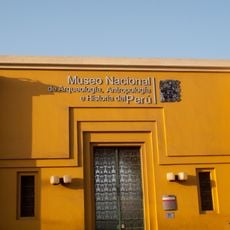
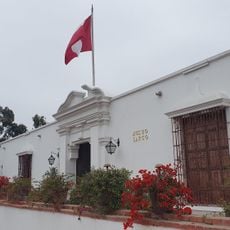
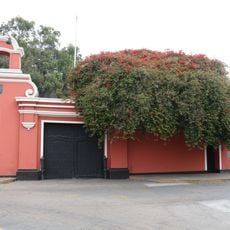
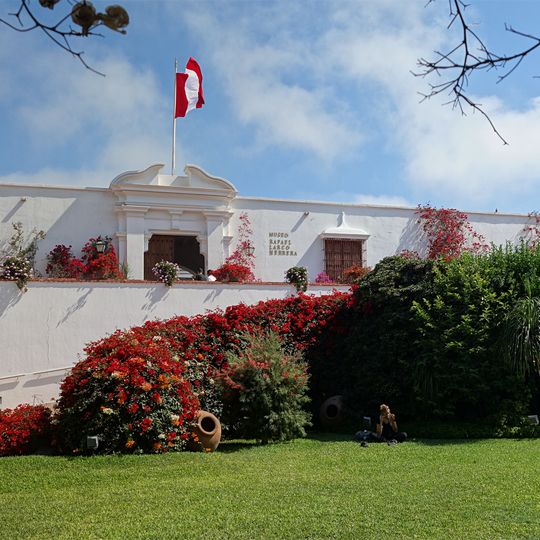
The museum opens Monday to Sunday from 9:00 a.m. to 7:00 p.m. The entrance, marked by black lettering reading "MUSEO RAFAEL LARCO HERRERA" beside a small wooden-grilled window, leads into the 18th-century Cueva hacienda, which was remodelled after its acquisition in the early 1950s to recover the style of a manor house.
The storage area remains open to visitors and displays 30,000 classified ceramic pieces on industrial shelves, sorted by form and function. This arrangement lets guests directly compare the variety of pre-Columbian ceramic production and spot patterns in shape and decoration.
The community of curious travelers
AroundUs brings together thousands of curated places, local tips, and hidden gems, enriched daily by 92,861 contributors worldwide.