Huaca Huantinamarca, Archaeological site in San Miguel District, Peru
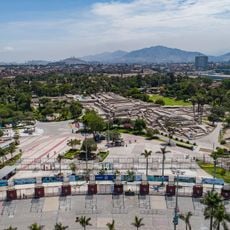
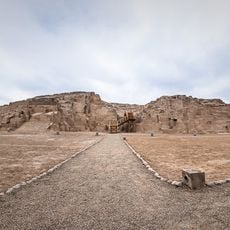
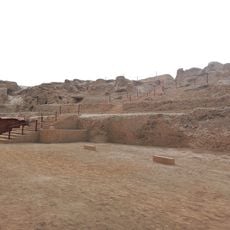
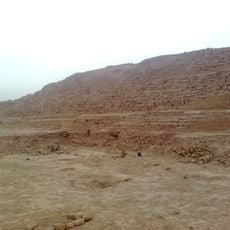
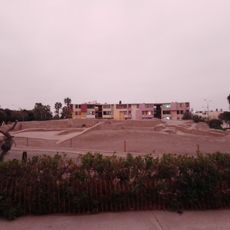
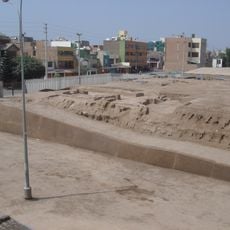
Huaca Huantinamarca is a truncated pyramid of the Ichma culture in San Miguel District, Lima, covering about 1,500 m² within a 3,652 m² site on the first block of Avenida Brígida Silva de Ochoa. Its walls of rammed mud (tapial corrido) form patios, enclosures and corridors built in at least two phases, with finger marks still visible on some smoothed surfaces.
Huantinamarca was the main seat of a community within the Maranga complex, tied to the production of corn chicha for agricultural-calendar rituals, and took its final form during the Late Horizon (1476–1532), when the Incas held the central coast. After the pre-Columbian period it became a mausoleum, then served the Spanish for water control and as a lookout over crops and the sea against pirate raids. Excavations in 2010 found 25 tombs holding about 100 bodies with hundreds of ceramic vessels and textiles.
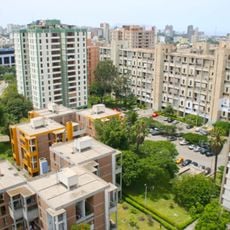
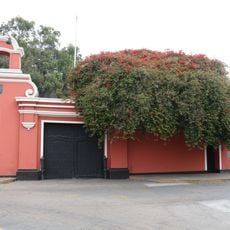
The name Huantinamarca may derive from the Huatica canal that linked the site to the Maranga complex, or from the Quechua word "huantti", meaning warts, as recorded by Fray Diego González Holguín in 1612. Today the huaca stands inside the Parques de la Huaca condominium as the centrepiece of a public park, and neighbours treat it as part of their collective identity.
The location sits next to a residential area and can be visited while walking through the neighborhood. Wear comfortable shoes and set aside time to explore the different rooms and pathways at your own pace.
In 2010 excavations found 25 tombs holding about 100 human bodies, with hundreds of ceramic vessels and textiles. Some pottery shows Chancay and Chimú influence, and colonial finds include Panama-style polychrome ceramics, a leather shoe, a glass bead and a playing card.
The community of curious travelers
AroundUs brings together thousands of curated places, local tips, and hidden gems, enriched daily by 92,776 contributors worldwide.