Huaca San Marcos, Archaeological pyramid in Lima District, Peru
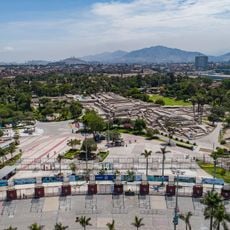
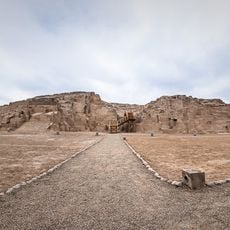
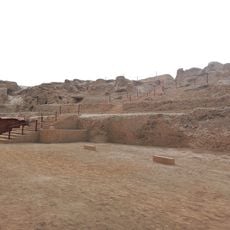
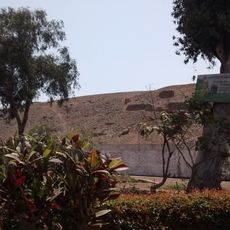
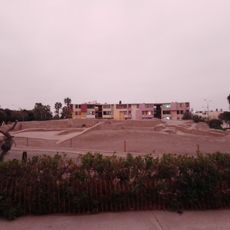
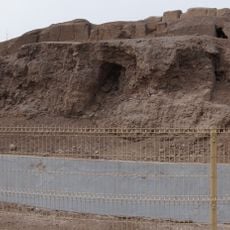
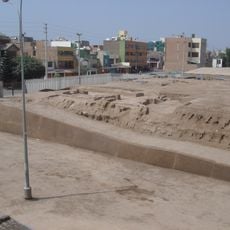
Huaca San Marcos is a pyramidal adobe monument of the Maranga complex, measuring 300 by 120 metres at its base and 30 metres high, the largest huaca of that complex. It was built as five superimposed platforms topped by various enclosures, and its small adobe retaining walls were plastered and painted yellow. A small platform attached on the south side was cut in 1924 for the Avenida del Progreso, today Venezuela, which separates it from Huaca 22.
Construction of Huaca San Marcos began around 450 AD, in the late phases of the Lima Culture, and the site was occupied during the Early Intermediate Period and Middle Horizon 1 and 2 (450-750 AD). From 600 AD many Maranga buildings were abandoned as the religious centre of Pachacamac rose. Under the later Ichma culture the pyramid was reused as a cemetery.
The name "Huaca San Marcos" comes from the university campus that surrounds it; before the campus was built, the site lay within the Aramburú estate and was called "Huaca Aramburú". That old name now belongs to Montículo 22, a smaller mound to the south. Under the Ichma culture the pyramid was reused as a cemetery.
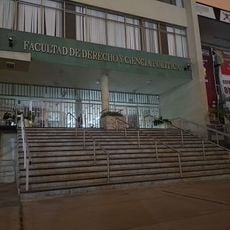
The site sits within the university campus and is somewhat hard to spot since buildings partially surround and overshadow it. It is best visited early in the day or during academic breaks when there is less university traffic.
Excavations at the huaca have yielded ceramic vessels, funerary bundles, textiles, offerings such as spondylus shells and quipus. Under the Ichma culture the pyramid, originally the main building of Maranga, was reused as a cemetery, so burials were placed within a Lima-culture monument.
The community of curious travelers
AroundUs brings together thousands of curated places, local tips, and hidden gems, enriched daily by 92,861 contributors worldwide.