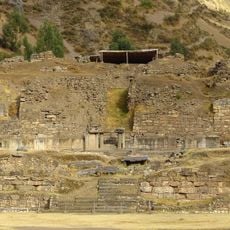
Portal of the Falcons, Stone portal at Chavín de Huántar, Peru.
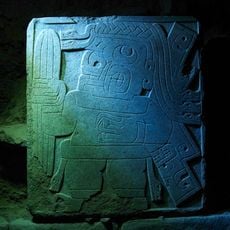
The Portal of the Falcons is a megalithic structure at the center of the east facade of Building A (the New Temple) at Chavín de Huántar. It has two circular columns 2.30 m high and 61 cm in diameter, each carved with an anthropomorphic being, and a projecting frieze with eight falcon-like zoomorphic figures, now split in two. The facade is white granite to the south and black limestone to the north.
The portal was built around 900 BC when Chavín de Huántar served as a major religious center that drew people from across the region. The site fell into obscurity until archaeological work in the 20th century brought attention back to it.
The name Black and White Portal was given by the American archaeologist John Rowe, referring to the white granite blocks on the south side and the black limestone on the north. The eight falcon-like beings on the projecting frieze, now split in two, are among the carvings visitors can pick out. The anthropomorphic figures on the columns were called "guardian angels" by Rowe.
The site is best reached from Huaraz, which has regular connections to the archaeological location. Since the site sits in the mountains, weather can change quickly, so it is wise to prepare for different conditions.
The portal features a contrast between light and dark stones in its pattern, showing how deliberately the builders selected their materials. This color combination was not accidental but a planned part of the design.
The community of curious travelers
AroundUs brings together thousands of curated places, local tips, and hidden gems, enriched daily by 94,587 contributors worldwide.