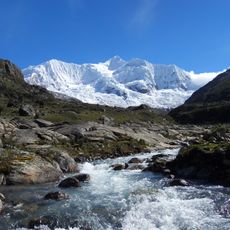
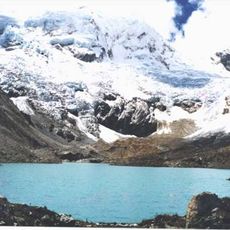
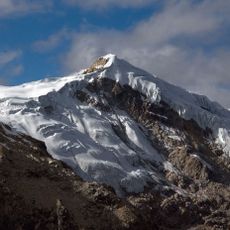
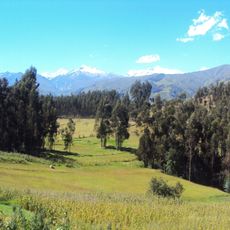
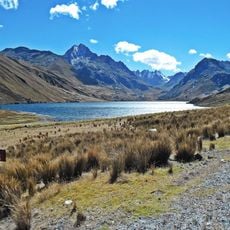
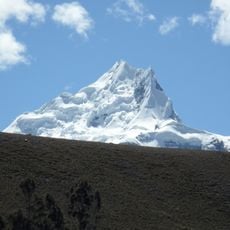
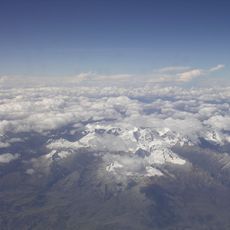
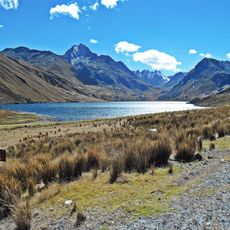
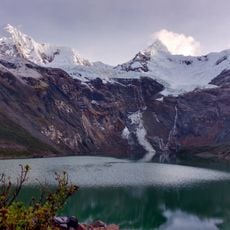
Huantsán, Mountain summit in Cordillera Blanca, Peru
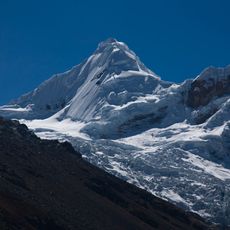
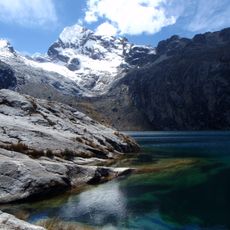
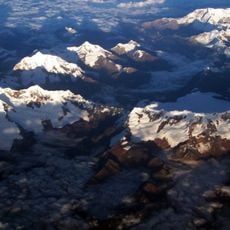
Huantsán is a four-peaked mountain in the Cordillera Blanca rising to 6,395 meters at its main summit, with three secondary peaks ranging between 5,913 and 6,270 meters. The formation features varied terrain and offers multiple climbing routes.
The first successful ascent occurred in 1952 when Lionel Terray, Cees Egeler, and Tom de Booy reached the main summit via the northwest ridge. This pioneering climb established the route as a classical approach to the mountain.
The mountain's name appears as Huantsán, Huantsan or Tunsho, and in modern Quechua orthography as Wantsan. Its east face has never been climbed. The 1945 avalanche from its slopes buried the village of Chavín, killing about 500 people, a disaster still remembered in the region.
The north-northwest ridge route demands technical climbing ability with steep sections and mixed terrain. Climbers should bring solid alpine experience and assess local conditions before attempting this approach.
The east face of Huantsán has never been climbed and remains unclimbed. The mountain's four summits are split between the provinces of Huaraz and Huari, and the whole massif lies within Huascarán National Park, protected since 1975.
The community of curious travelers
AroundUs brings together thousands of curated places, local tips, and hidden gems, enriched daily by 92,775 contributors worldwide.