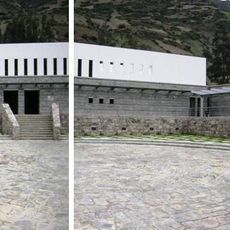
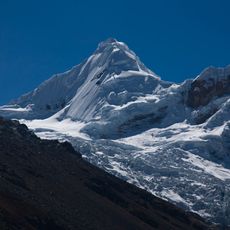
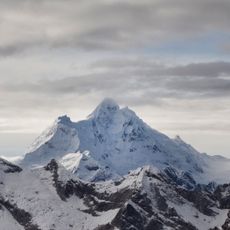
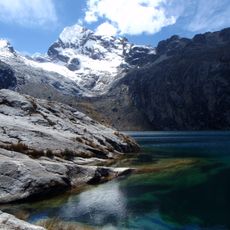
Markahirka, Archaeological site in Masin, Peru.
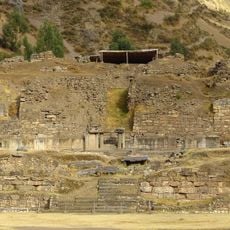
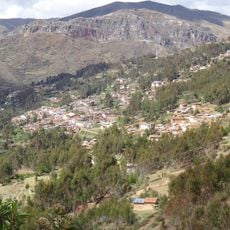
Markahirka is an archaeological site on the mountain of the same name in the districts of Cajay and Masin, Huari Province, Áncash, at 3,580 metres. It has a residential area of 40 houses, a funerary zone with 38 chullpas, eight burial caves, an amphitheatre and a tower. Cave paintings are found at the site, which looks over the Puchka valley toward Huari and Huachis.
Marcahirka belongs to the Late Intermediate Period of Andean prehistory. The site holds a residential sector of 40 houses, a funerary sector with 38 chullpas, eight burial caves, an amphitheatre and a watchtower. Bioarchaeological study of bones from Caves 1 and 2 and Chullpa 3 found evidence of trepanation and deliberate cranial reshaping.
The name Markahirka combines Quechua marka (village) and hirka (mountain), giving "village mountain"; Hispanicized spellings include Marcajirca and Marca Jirca. The site lies in both Cajay and Masin districts, and its stone tombs are called chullpas in Quechua.
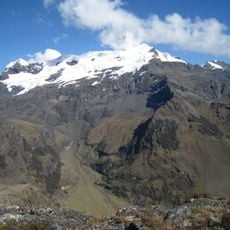
Markahirka lies at 3,580 metres on the mountain of the same name, in the districts of Cajay and Masin, Huari Province. The altitude makes acclimatisation advisable before walking the site. From the ruins you look down into the Puchka valley and across to the towns of Huari and Huachis.
Markahirka belongs to the Late Intermediate Period, and its funerary caves hold the remains of dozens of people. Bioarchaeological study of Cave 1 (8 adults, 6 subadults), Cave 2 (50 adults, 18 subadults) and Chullpa 3 (17 adults, 12 subadults) found evidence of trepanation and deliberate cranial reshaping.
The community of curious travelers
AroundUs brings together thousands of curated places, local tips, and hidden gems, enriched daily by 94,505 contributors worldwide.