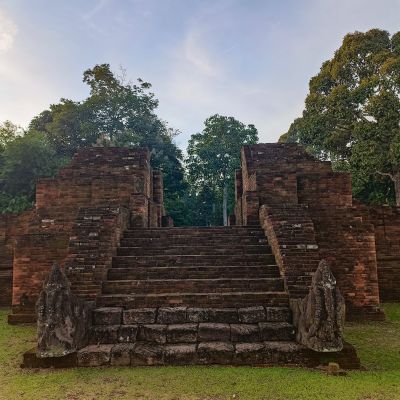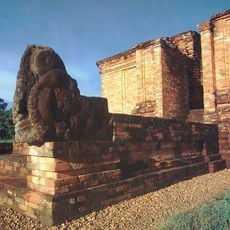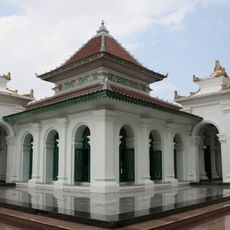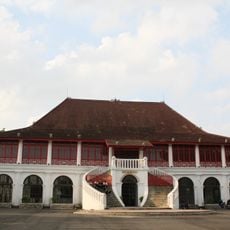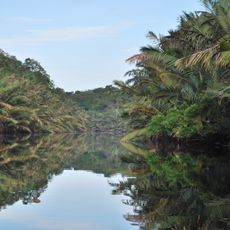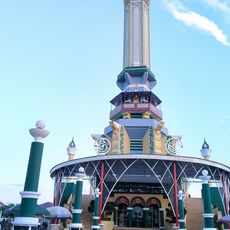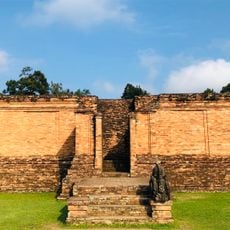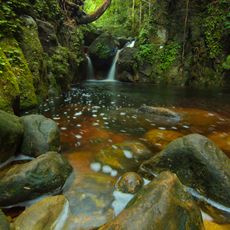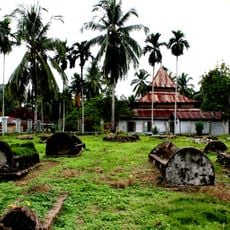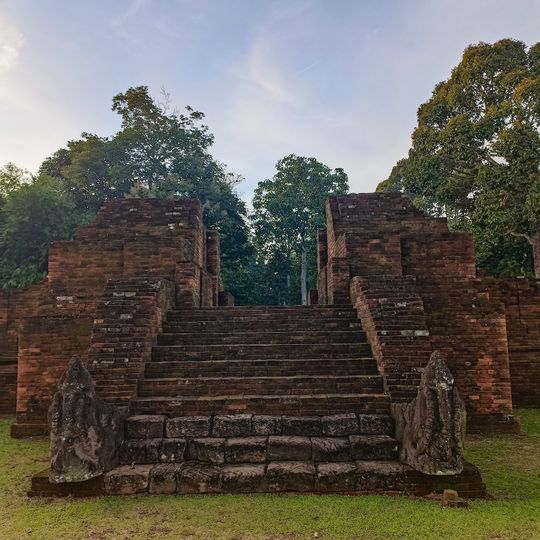
Candi Kedaton, Buddhist temple ruins in Muaro Jambi, Indonesia.
Candi Kedaton is a brick temple complex in Muaro Jambi, Indonesia, made up of several interconnected structures from the Majapahit period. The site covers a wide area and includes underground passages, water channels, and open hall spaces arranged across the grounds.
The complex dates to the 13th century, when it served as a residence for members of the Majapahit royal family. It was later abandoned and only brought back to light through archaeological work carried out centuries after.
The name "Kedaton" comes from Javanese and means something close to "royal palace." Walking through the grounds, visitors can still see how spaces were laid out separately for ceremonies and for the daily life of the court.
The site is best explored on foot, though the ground between structures can be uneven, so wear comfortable shoes. A morning visit helps avoid the midday heat, which can be strong in this part of Indonesia.
On the grounds stands a well called Sumur Upas, whose water was once used for ritual purification by those who lived here. This well is one of the few remaining traces of the religious practices that once took place at the site.
The community of curious travelers
AroundUs brings together thousands of curated places, local tips, and hidden gems, enriched daily by 91,757 contributors worldwide.