Rabaul caldera, Active caldera near Simpson Harbour, Papua New Guinea
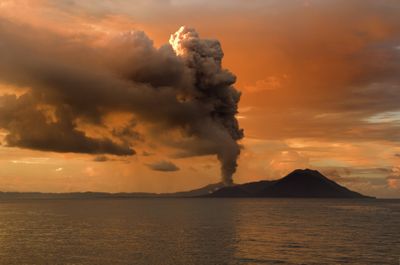
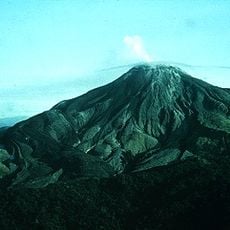
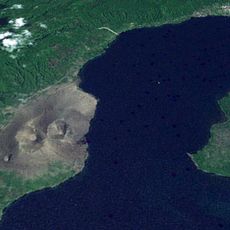
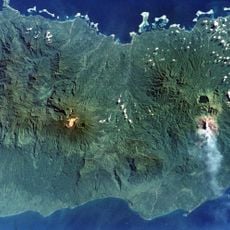
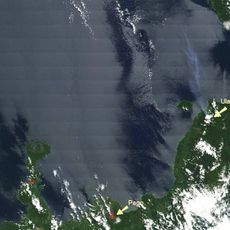
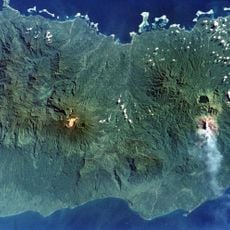
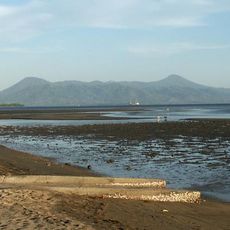
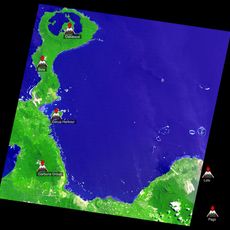
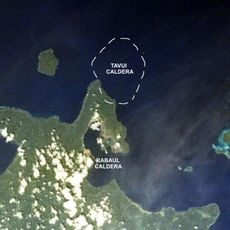
Rabaul caldera is a polylobed, elliptical volcanic depression 8 km wide and 14 km long, open to the Bismarck Sea on its south-east rim, forming Blanche Bay. The town of Rabaul sits inside this natural harbour. The rim holds several cones, including Tavurvur (223 m) and Vulcan (243 m), and the complex rises to 688 m at Kombiu.
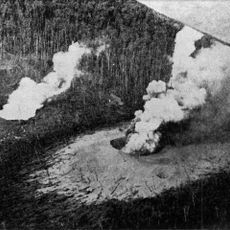
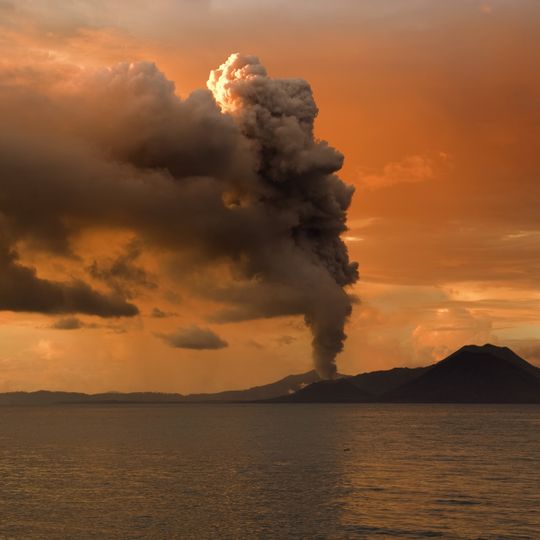
The present caldera formed in stages through large explosive eruptions, including one around 540 BC and another about 1,400 years ago when the sea breached the depression to form Blanche Bay. The first eruption observed by Europeans occurred in 1767, and thirteen more have followed. The 19 September 1994 eruption of Tavurvur and Vulcan destroyed much of Rabaul town.
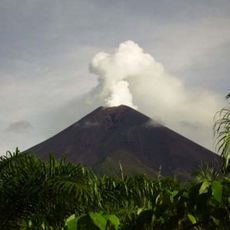
The caldera gives its name to Rabaul, the town built inside it, which was the colonial capital before the 1994 eruption destroyed much of it. Tavurvur and Vulcan are the two active cones on the caldera rim; the 1937 eruption of both led to the founding of the Rabaul Volcano Observatory, which still monitors Papua New Guinea's volcanoes.
The caldera rim and the cones of Tavurvur and Vulcan lie on the Gazelle Peninsula, reached from Rabaul town on the shore of Blanche Bay. The Rabaul Volcano Observatory monitors activity; check its bulletins before walking near active vents. Ash can make roads and tracks slippery, and the 1994 eruption destroyed Rabaul airport, so plan overland access.
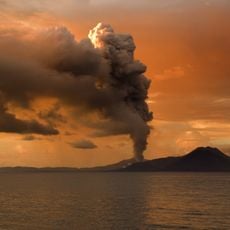
The 1994 eruption destroyed Rabaul airport and buried most of the town in heavy ashfall; Vulcan has stayed quiet ever since, while Tavurvur keeps venting ash. The five deaths included one person struck by lightning from an ash cloud, a hazard noted in accounts of the event.
The community of curious travelers
AroundUs brings together thousands of curated places, local tips, and hidden gems, enriched daily by 94,561 contributors worldwide.