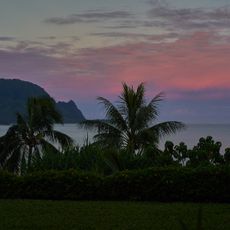
Lumahaʻi Beach, Beach on the north shore of Kauai, United States
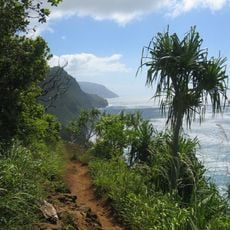
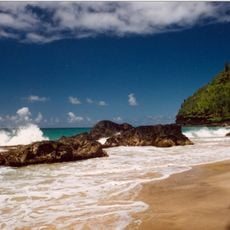
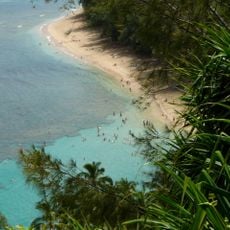
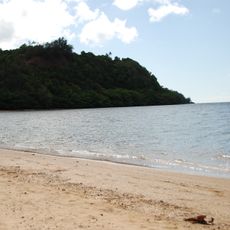
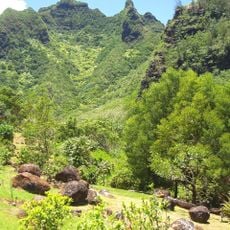
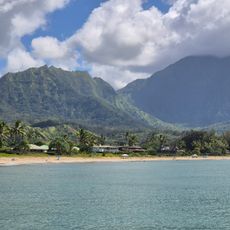
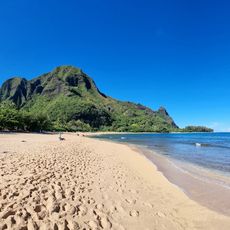
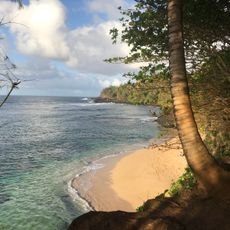
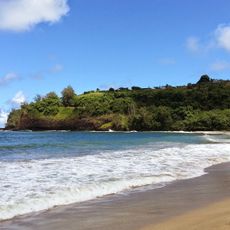
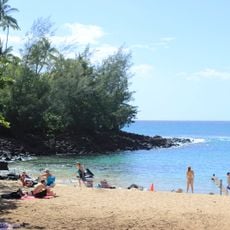
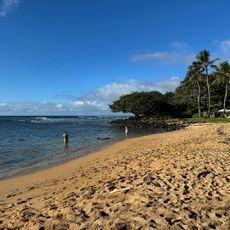
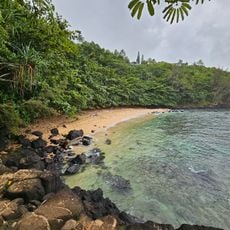
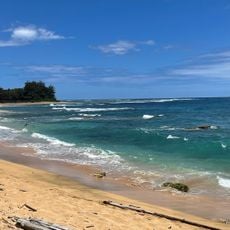
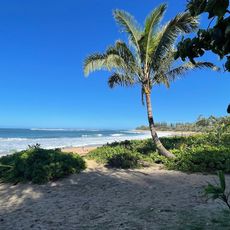
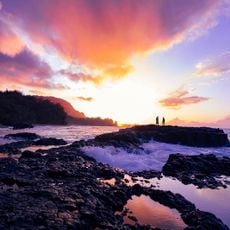
Lumahaʻi Beach lies at the mouth of the Lumahaʻi River on Kauaʻi's north shore, reached from Hawaii Route 560 about 1.4 miles from Hanalei. The beach runs roughly 4,000 feet against vertical volcanic cliffs covered in vegetation. Its sand contains olivine, an iron-magnesium-silica mineral that tints it yellowish green, and lava rocks at the river mouth help create rip currents.
The beach became widely known after the 1958 film South Pacific, in which Mitzi Gaynor filmed a memorable musical scene on this shore. That connection brought a wave of visitors who wanted to see the setting from the film, and it has shaped how the place is known ever since.
Three named trees grow near the river mouth: the hibiscus of Maihi, the breadfruit of Weli and the pandanus of Mapuana, whose red-fruited variety is called Kahala-o-Mapuana and is noted for its scent. Legend credits the Menehune Maihi-lau-koa with planting the hibiscus grove and Weli with the breadfruit, whose low-spreading branches inspired the verse "Na'ulu-o-Weli punohu mai ana".
The eastern section is easier to reach from the road, while the western part requires a short walk along a trail. Currents can be strong at both ends, so it is worth checking local conditions before going into the water.
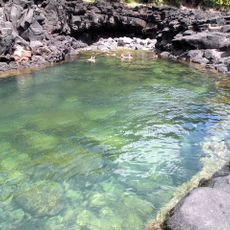
In summer, sand dunes form at the western end and block the river from reaching the ocean, creating a temporary lagoon that lasts for a few months. This seasonal shift changes the shape of the beach and the look of the water area from one year to the next.
The community of curious travelers
AroundUs brings together thousands of curated places, local tips, and hidden gems, enriched daily by 95,352 contributors worldwide.