Knickerbocker Bicycle Bridge, bridge in United States of America
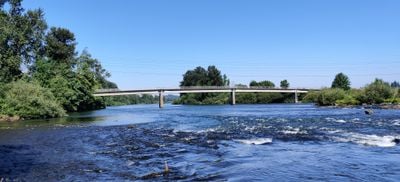
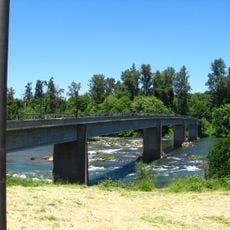
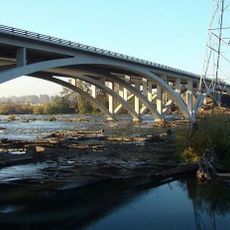
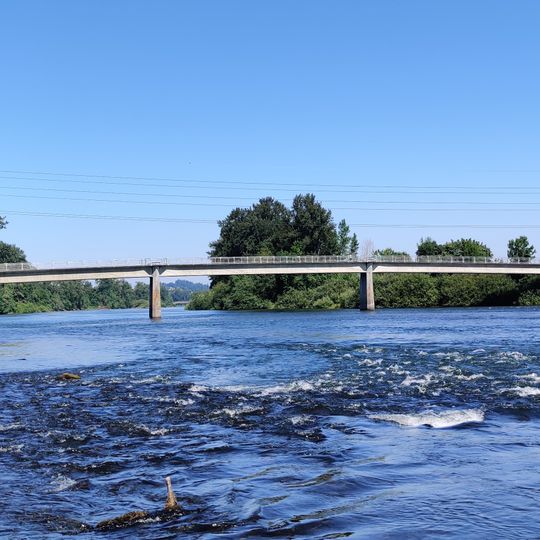
Knickerbocker Bicycle Bridge is a pedestrian and bicycle crossing over the Willamette River in Eugene, Oregon, connecting the University of Oregon campus to Springfield to the east. It features a simple design with concrete supports and arches, a paved deck, and wooden railings, measuring about 159 meters (521 feet) long and 4.3 meters (14 feet) wide to accommodate two-way bike traffic and walkers comfortably.
Built in 1980 by the Eugene Water & Electric Board to carry water pipes across the river, the bridge was later expanded with a pedestrian and bicycle deck funded by the city and county. This transformation made it part of the Willamette River Greenway initiative, which aimed to make parks and trails along the river accessible to everyone.
The bridge honors Willie Knickerbocker, a beloved local cyclist known for long-distance rides and performing tricks for children in the 1950s. A plaque installed in 2018 celebrates his memory and reflects how biking has been woven into Eugene's community identity over generations.
Located just west of Interstate 5, the bridge connects to trail systems on both sides that lead to parks, the university campus, and neighborhoods, making it part of a wider network for convenient travel. The crossing is open year-round and relatively flat, suitable for cyclists and walkers of different abilities.
The bridge started as a utility structure carrying water pipes and was later converted for public pedestrian and bicycle use, an unusual way to transform infrastructure into community transit. This dual purpose shows how practical engineering solutions in Eugene made sustainable recreation options possible.
The community of curious travelers
AroundUs brings together thousands of curated places, local tips, and hidden gems, enriched daily by 92,750 contributors worldwide.