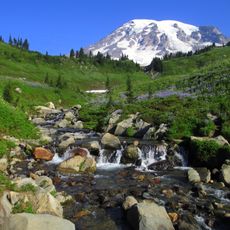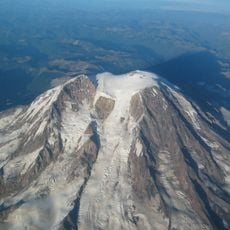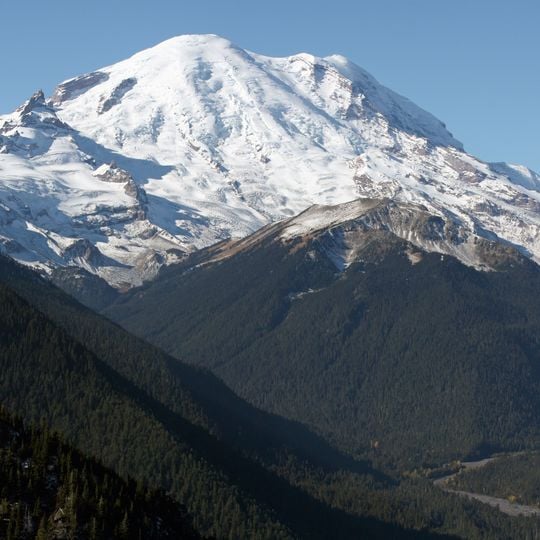
Mount Rainier, Active stratovolcano in Mount Rainier National Park, Washington, United States
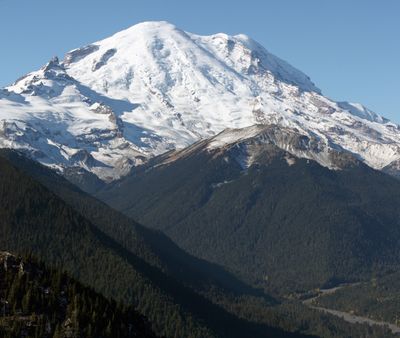
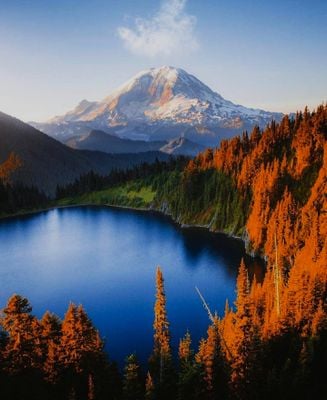
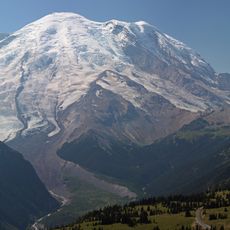
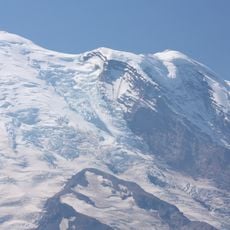
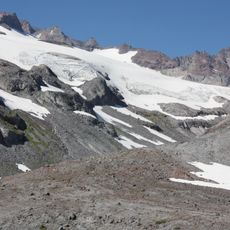
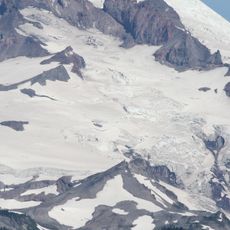
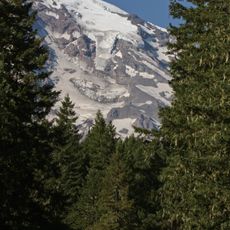
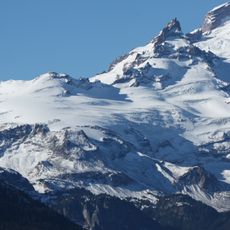
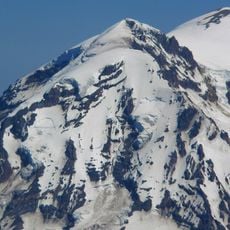
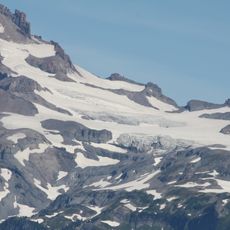
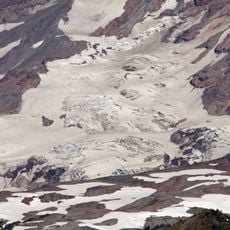
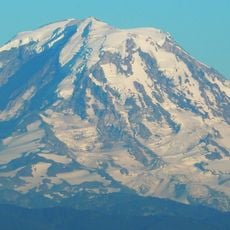
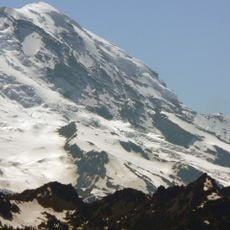
Mount Rainier is a stratovolcano in Washington that reaches 4,392 meters in elevation and displays two craters at the top. Twenty-six large glaciers cover the slopes and feed rivers throughout the surrounding valleys.
Captain George Vancouver named the peak in 1792 after Admiral Peter Rainier, while Indigenous peoples referred to it as Tahoma. Hazard Stevens and Philemon Van Trump completed the first documented ascent in 1870.
Lushootseed speakers call the mountain təqʷubəʔ, "snow-covered mountain", and xʷaq̓ʷ, "sky wiper"; a 2025 linguistic study counted 20 Indigenous names. Cowlitz speakers say təx̣ʷúma, borrowed into Sahaptin as Tax̱úma, and "Tacoma" is an anglicization of təqʷubəʔ. George Vancouver named it after Rear Admiral Peter Rainier, and the name Tacoma stayed in use until Congress weighed a change as late as 1924.
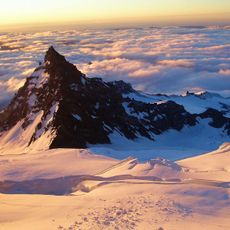
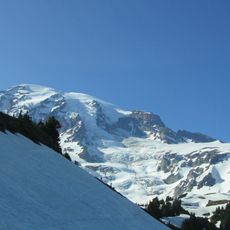
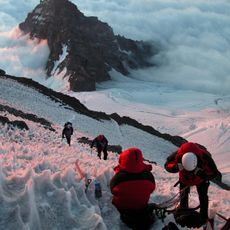
Winter conditions require tire chains between November and May, and snowfall can occur at higher elevations throughout the year. Climbers attempting routes above 3,000 meters (roughly 10,000 feet) must register and carry proper equipment.
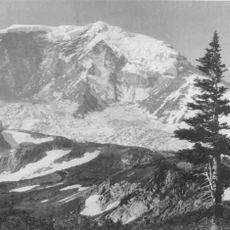
The glacier system here forms the largest network of permanent ice in the lower 48 states. Geothermal heat beneath the summit melts ice from below, creating caves that shift and collapse with each season.
The community of curious travelers
AroundUs brings together thousands of curated places, local tips, and hidden gems, enriched daily by 92,838 contributors worldwide.