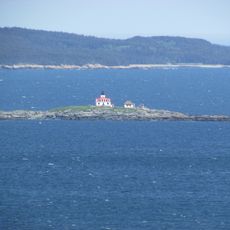
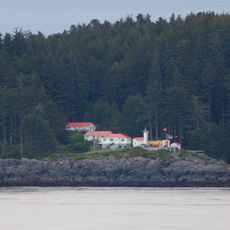
Cape Scott Provincial Park, Provincial park on the northern tip of Vancouver Island, British Columbia, Canada
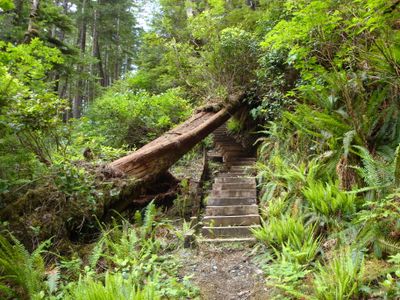
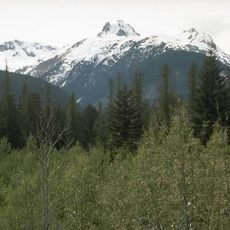
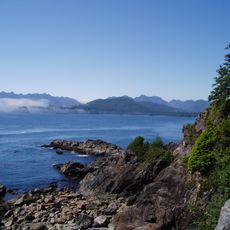
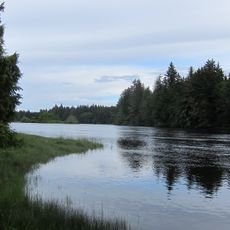
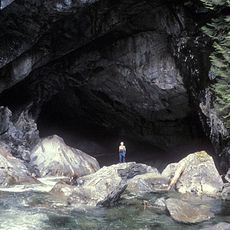
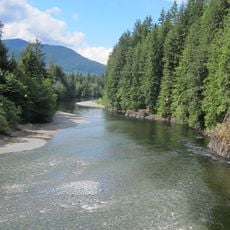
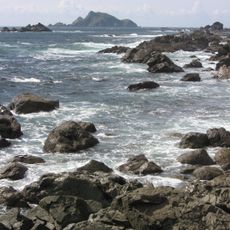
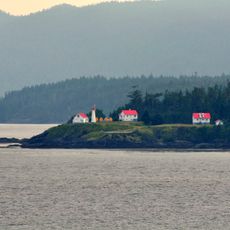
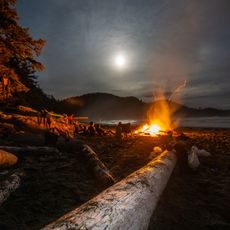
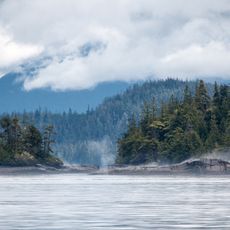
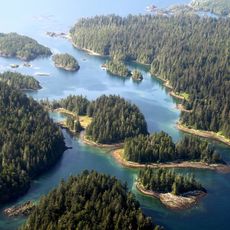
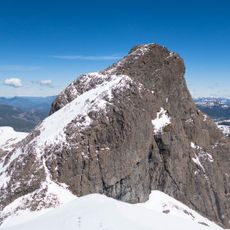
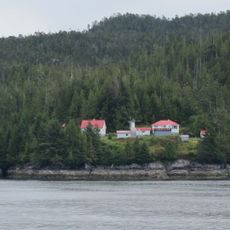
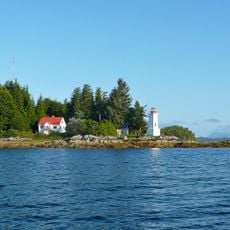
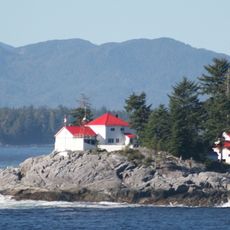
Cape Scott Provincial Park covers around 22,000 hectares along the northwest coast of Vancouver Island, combining sandy beaches with old-growth forests. A network of hiking trails connects these varied landscapes and reveals the park's natural diversity.
The cape received its name in 1786 to honor David Scott, a merchant who backed a maritime fur trade expedition in the region. Danish settlers arrived later, establishing a community around Hansen Lagoon starting in 1897 that added another layer to the area's history.
The Kwakwaka'wakw, formed from the Yutlinuk, Nakomgilisala and Tlatlasikwala, hold three reserves next to the park, including the former village of Nahwitti. Interpretive signs at the sand neck between Experiment Bight and Guise Bay give the First Nations names: the bight meant "whale between on beach" and the neck "against each other". To avoid the turbulent cape waters, people hauled their canoes by hand across this neck.
Most visitors access the western section through forest roads connecting Port Hardy and Holberg to San Josef Bay. The eastern part of the park requires boat or floatplane access, so travelers should plan their route ahead of time.
At the sand neck between Experiment Bight and Guise Bay, Kwakwaka'wakw paddlers hauled their canoes overland to avoid the turbulent water off the cape. Interpretive signs give the First Nations names: the bight meant "whale between on beach" and the neck "against each other".
The community of curious travelers
AroundUs brings together thousands of curated places, local tips, and hidden gems, enriched daily by 93,774 contributors worldwide.