Kolob Canyons, Canyon system in Washington and Iron Counties, United States.
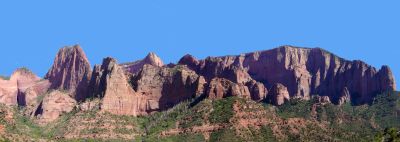
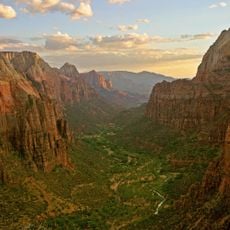
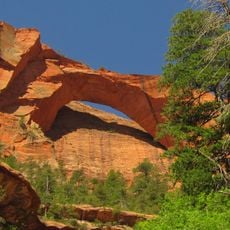
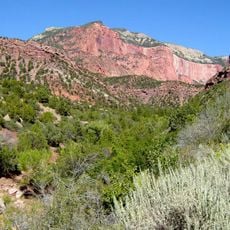
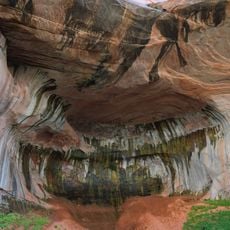
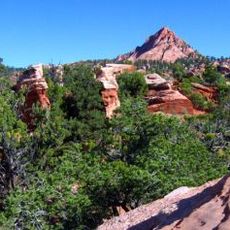
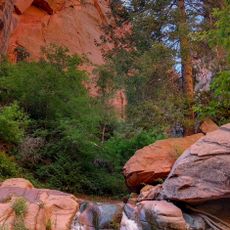
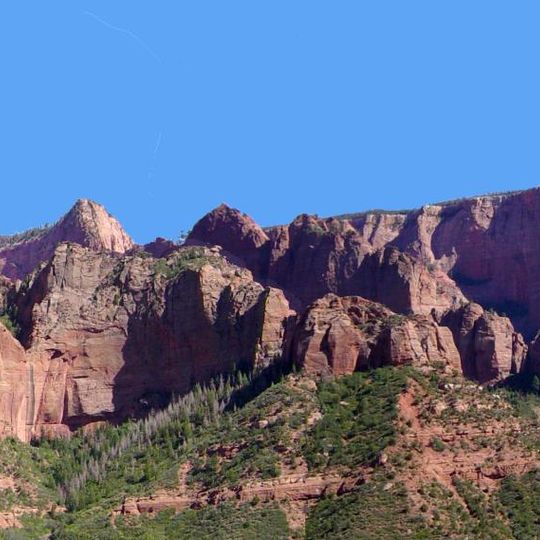
Kolob Canyons is the northwestern section of Zion National Park in southwestern Utah, reached from Interstate 15 exit 40 about 30 km south of Cedar City. Its parallel canyons cut into red and orange Navajo sandstone, with jagged upper rims and near-vertical walls streaked by dark vertical stains. Green trees and shrubs cover the lower slopes, and the section holds Tucupit Point and Kolob Arch, one of the world's longest natural arches.
The Kolob section was proclaimed a separate Zion National Monument in 1937 and was incorporated into Zion National Park in 1956. Congress designated 85% of the park as wilderness in 2009, a status that also covers much of this northern section.
The name Kolob comes from Mormon scripture, where it denotes a star or place near God; Mormons settled the region in the early 1860s. The Kolob Canyons section is reached from Interstate 15 exit 40, about 30 km south of Cedar City. The sources record no rock markings here, so visitors should not expect to find any along the trails.
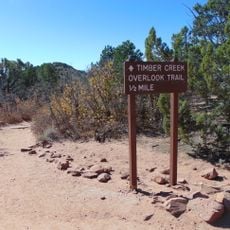
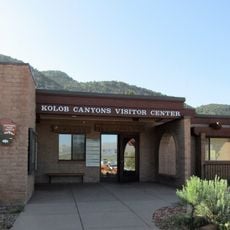
The entrance is off Interstate 15 at exit 40, separate from the main Zion National Park entrance, so visitors should not expect to drive directly between the two sections without returning to the highway. A short road leads through the area and connects the trailheads and viewpoints.
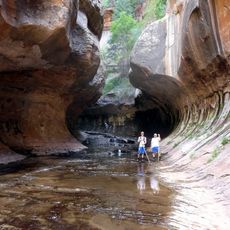
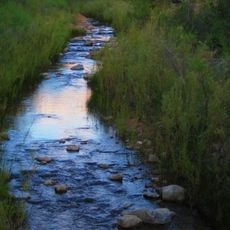
Kolob Arch, reached by trail from the Kolob Canyons area, is one of the world's longest natural arches. The canyons themselves cut through red Navajo sandstone on the Markagunt and Kolob plateaus, and streams here follow rectangular paths because they run along jointing planes in the rock.
The community of curious travelers
AroundUs brings together thousands of curated places, local tips, and hidden gems, enriched daily by 93,618 contributors worldwide.