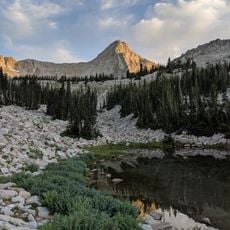
Little Cottonwood Canyon, Canyon in Salt Lake County, US.
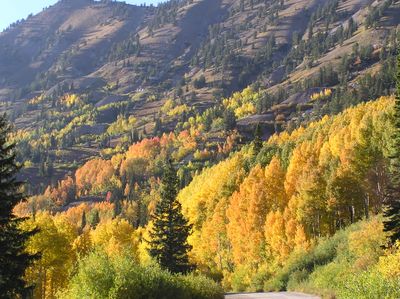
Little Cottonwood Canyon is a glacial trough in the Wasatch Range, about 15 miles (24 km) from Salt Lake City, Utah. Its lower third exposes smooth, steep faces of the Little Cottonwood stock, a granitic intrusion of granodiorite, quartz monzonite and granite. Little Cottonwood Creek runs the length of the canyon from Cecret Lake at Alta westward, and State Route 210 climbs from the mouth to Alta.
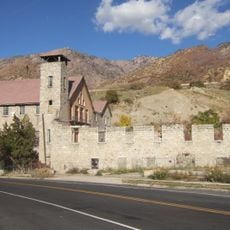
The canyon's granite was quarried near its mouth for the Salt Lake Temple of the Church of Jesus Christ of Latter-day Saints. The Little Cottonwood stock, a granitic intrusion about 30.5 to 29 million years old, was later cut by the White Pine intrusion, roughly 27 to 26 million years old, source of an inactive molybdenum deposit. State Route 210 now runs from the canyon mouth up to Alta.
The canyon takes its name from the cottonwood trees along Little Cottonwood Creek; the "little" distinguishes it from Big Cottonwood Canyon to the north. The Utah Native Plant Society leads wildflower walks in Albion Basin, where rare and endemic plants grow. Climbers call the local rock granite, though it is mostly quartz monzonite.
The main road up the canyon is open during warmer months but typically closed in winter due to heavy snow. Day trips work well for hiking, though higher elevations get cold quickly, so warm layers and sturdy shoes are worth bringing year-round.
The canyon's granite walls are the source of the Salt Lake Temple's stone: pioneers quarried quartz monzonite and granodiorite from the Little Cottonwood Stock near the canyon mouth. The same rock draws climbers today, with 529 established boulder problems, the second most in Utah.
The community of curious travelers
AroundUs brings together thousands of curated places, local tips, and hidden gems, enriched daily by 94,020 contributors worldwide.