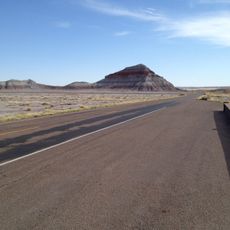
Zuñi Salt Lake, Sacred salt lake in Catron County, New Mexico, United States
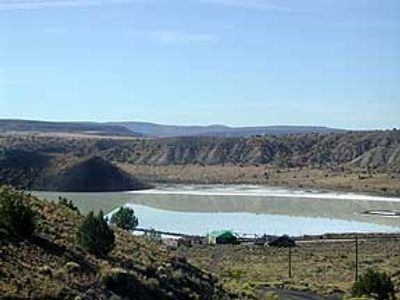
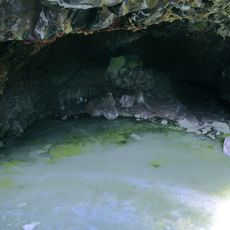
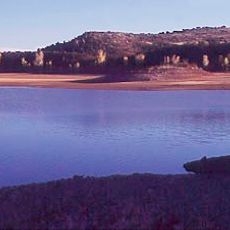
Zuñi Salt Lake is a shallow volcanic crater lake that reaches only about 4 feet (1 meter) in depth during wet seasons and transforms into salt flats through natural evaporation. The basin sits at about 6,200 feet (1,900 meters) elevation and supports a specialized ecosystem of brine shrimp, alkali flies, and cyanobacteria.
For centuries Zuni, Acoma, Laguna, Hopi and Taos peoples made annual pilgrimages here to harvest salt for cooking and ceremonies, and ancient roads radiate from the lake to pueblos and Chaco. In 1598 Juan de Oñate sent Captain Marcos Farfán, who reported nothing in Christendom could equal it; Hispanic explorers called it Salinas. The U.S. returned the lake and 5,000 acres to Zuni control in 1985.
The lake is the home of the Salt Mother deity, Ma'l Okyattsik'i, and Zuni, Acoma, Laguna, Hopi and Taos Pueblo people make annual pilgrimages to harvest salt for culinary and ceremonial use. Ancient roadways radiate from the lake to pueblos and sites such as Chaco. Geronimo recorded that while visiting, his people killed no game and attacked no enemy.
The lake lies about 60 miles (97 km) south of Zuni Pueblo in Catron County, reached by unpaved roads; the shallow water, only 4 feet (1.2 m) deep in wet seasons, leaves salt flats in dry periods. There are no facilities, so carry water and fuel, and check road conditions before setting out. The site is sacred to the Zuni and other pueblos, whose annual salt pilgrimages continue; visitors should avoid disturbing salt deposits or ceremonial areas.
Geronimo recorded that at this lake his people were forbidden to kill game or attack an enemy, and all creatures could come and go unmolested. The lake and 5,000 acres around it were returned to Zuni control by the U.S. government in 1985, after the site had been left outside the original reservation.
The community of curious travelers
AroundUs brings together thousands of curated places, local tips, and hidden gems, enriched daily by 94,346 contributors worldwide.