Xiaohaizi Shuiku, Reservoir in the People's Republic of China
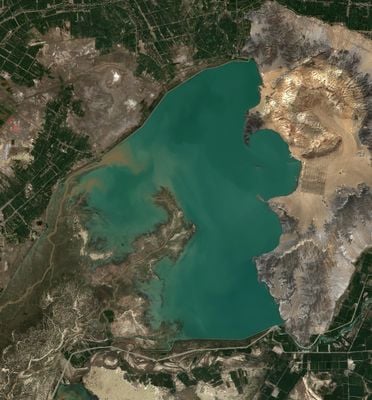
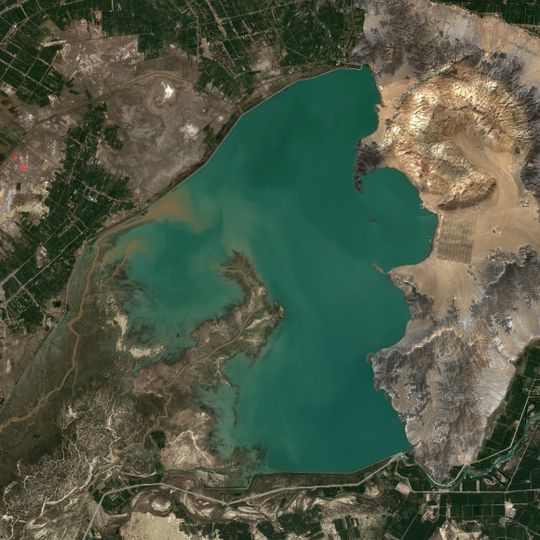
Xiaohaizi Shuiku is a large water storage area in Xinjiang, China, situated across a flat plain near the town of Bachu. The reservoir stretches across the landscape with a wide, calm water surface that reflects the sky, serving as a major part of the lower Yelqang River water system.
The reservoir was constructed to manage water supplies and prevent floods in the region, serving as a key part of local infrastructure for many years. A severe earthquake in the past caused the dam to shift and form a small landslide, demonstrating how natural forces have shaped this structure.
The name Xiaohaizi comes from the Uyghur language and means 'alkaline water pit,' reflecting the mineral-rich history of the area. Local farmers and residents have used this water for generations to support their crops and daily needs, making it central to community life on the plains.
Daytime visits offer the best experience, as the wide sky reflects in the calm water and the landscape is most visible. Paths and viewing points have been built to provide safe access and allow visitors to enjoy the scenery while respecting the site's natural functions.
This site is known as the largest flatland water reservoir in northwestern China, with a storage capacity of about 7 billion cubic meters of water. It works in coordination with nearby reservoirs such as Yong'anba and Tuokelake to manage water flow, especially during dry seasons or heavy rain.
The community of curious travelers
AroundUs brings together thousands of curated places, local tips, and hidden gems, enriched daily by 90,885 contributors worldwide.