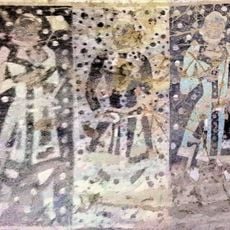
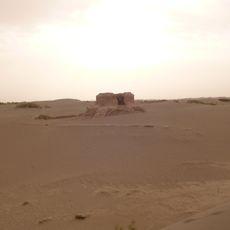
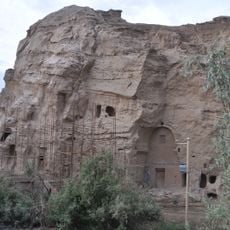
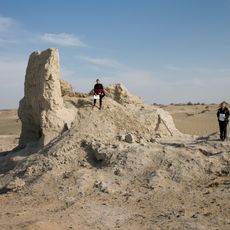
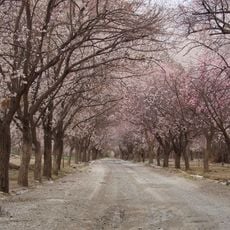
Mazar Tagh, Archaeological site in Taklamakan Desert, China
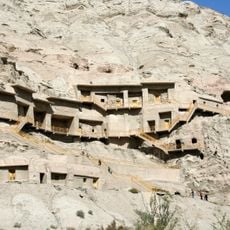
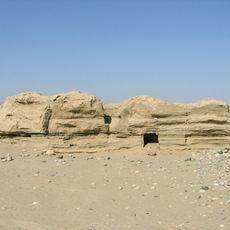
Mazar Tagh is a ruined hill fort in the Taklamakan Desert, north of Hotan in Xinjiang, China. The fort had five rooms and a watchtower that still stands in part. Aurel Stein excavated it in 1907 and 1913, finding hundreds of Tibetan military documents on paper and wood.
The fort served as a military post for the Tibetan Empire between the 8th and 9th centuries in the Khotan region. It was a hub for soldiers, officials, and merchants traveling the Silk Road.
The early Tibetan manuscripts found here reveal how administration and trade worked in the ancient Silk Road region. They show what daily life looked like for people who lived and worked at this desert outpost.
The site sits in one of China's harshest desert regions, so visitors should prepare well and bring plenty of water. Access is difficult and usually requires specialized guides familiar with the terrain.
Aurel Stein found a large refuse heap on the hill's north and northeast slopes, and it held hundreds of discarded Tibetan military documents on paper and wood. The British Library keeps 1,168 wooden pieces (IOL Tib N) and 321 paper pieces (Or.150000) from the fort and the heap.
The community of curious travelers
AroundUs brings together thousands of curated places, local tips, and hidden gems, enriched daily by 94,056 contributors worldwide.