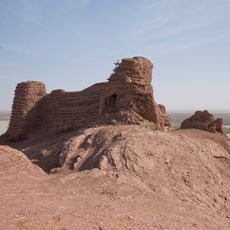
Niya, Archaeological site in Taklamakan Desert, China.
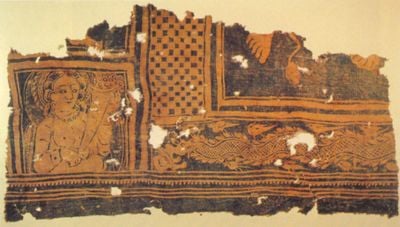
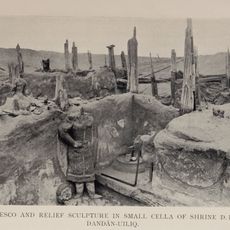
Niya is an archaeological site about 115 km north of modern Niya Town in Xinjiang, China, known in its native language as Caḍ́ota and in Han-dynasty Chinese as Jingjue. Excavations have uncovered roughly 100 dwellings, animal sheds, orchards, gardens, burial areas and agricultural fields. Finds include wooden tablets written in Kharoshthi in 105 CE, clay seals impressed with Athena Alkidemos, coins, a mouse trap, a walking stick, a bow and a carved stool.
The settlement began during the Han Dynasty about 2,000 years ago and served as an important trading post on the Silk Road. It was eventually abandoned, possibly due to shifts in trade routes or changes in water supply.
Niya's finds include about 100 wooden tablets bearing Kharoshthi script, sealed with clay impressions of Athena Alkidemos, Eros and Heracles, and dated to 105 CE. A parchment found there, reused to wrap a vegetable powder, carried early Sogdian writing like the Dunhuang Ancient Letters. The site also yielded the 'Five Stars Rising in the East Benefit China' arm guard.
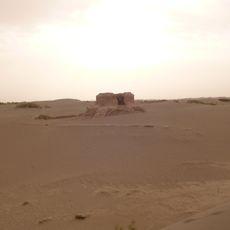
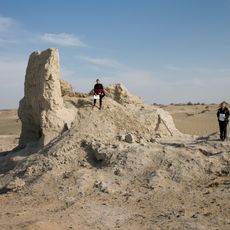
The site sits deep in the desert, roughly 115 kilometers north of the modern town of Niya, requiring travel across difficult terrain. Visiting the ruins requires an experienced guide and preparation for desert conditions such as heat and wind.
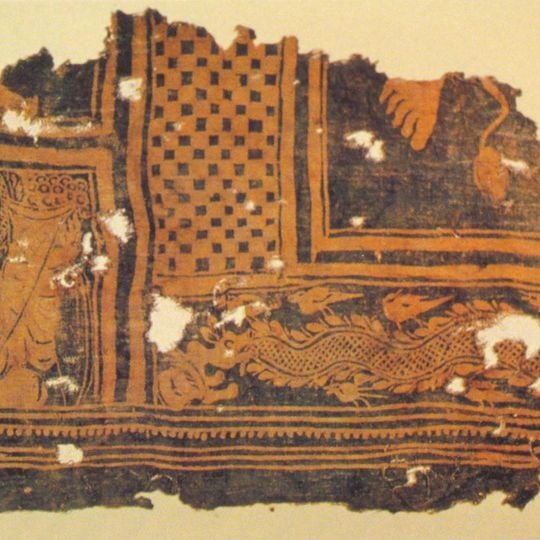
Among the most remarkable finds are everyday objects such as an ancient device for trapping pests and a hand-woven wool carpet. These simple items offer direct insight into the daily routines and craftsmanship of those who lived here.
The community of curious travelers
AroundUs brings together thousands of curated places, local tips, and hidden gems, enriched daily by 94,052 contributors worldwide.