Subashi, Buddhist archaeological site in Kuqa, China
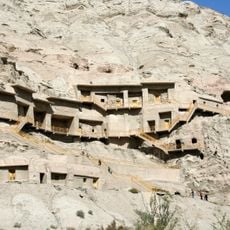
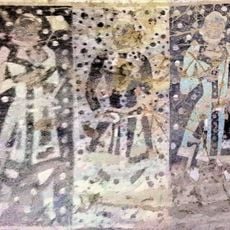
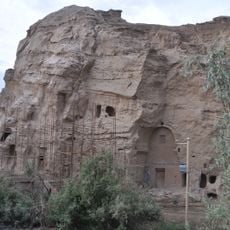
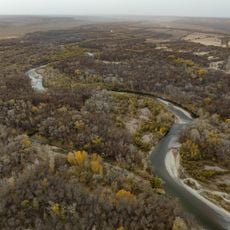
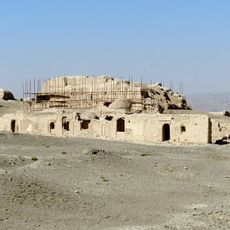
Subashi, also called Zhaohuli Temple, is a ruined Buddhist monastery at the mouth of the Weigan River on the southern slope of the Qoltag Mountains, northeast of Kucha. The site is divided into an eastern sector with a hall, monk cells and three stupas, and a western sector with three stupas and a monastery whose walls retain murals and Kuchean inscriptions.
Founded around the early Eastern Han, Subashi grew into the largest Buddhist monastery in the Kucha region during the Wei and Jin periods, housing nearly 200 monks under the abbot Fotuoshimi. Its strict discipline drew both western missionaries and Chinese pilgrims, and in 628 the Tang monk Xuanzang stopped here to preach before continuing to India. The site was partly excavated by the Japanese archaeologist Count Otani.
This place served as a major hub for Buddhist learning and practice along the Silk Road, drawing monks and travelers from distant lands. The layout of buildings and open spaces shaped how communities lived and worshipped together daily.
The ruins lie some distance from Kuqa and are best explored on foot while wearing sturdy shoes and expecting uneven ground. Bring water and sun protection as the site offers little natural shade.
Archaeologists have uncovered coins, pottery, and Buddhist texts that reveal how this place connected with travelers and merchants passing through. These objects tell stories of people who moved through here and left their mark.
The community of curious travelers
AroundUs brings together thousands of curated places, local tips, and hidden gems, enriched daily by 93,184 contributors worldwide.