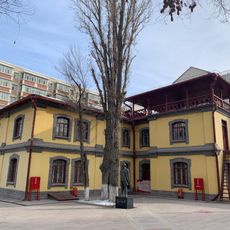
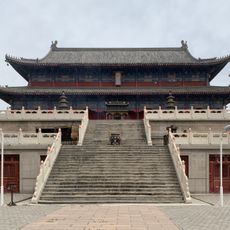
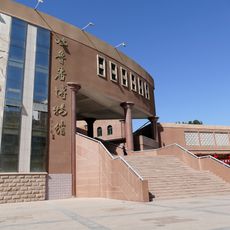
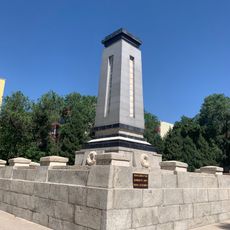
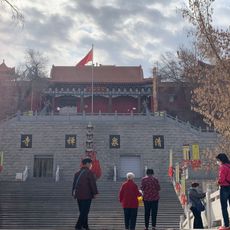
Qigexing Buddhist Temple Ruins, Buddhist temple ruins in Xinjiang, China.
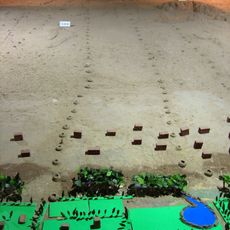
The Qigexing Buddhist Temple Ruins are an archaeological site near Karasahr containing over one hundred buildings and twelve cave temples spread across the entire area. The site preserves remains from different periods of ancient settlement.
The site developed during the second half of the first millennium as an important religious center on the northern Silk Road route. Its importance grew through the connection of trade routes that made it a hub for pilgrims and merchants.
The name Ming-oi, "Thousand Dwellings", comes from the Uyghur term also used for the Kizil Caves; Grünwedel recorded the local name Šorčuq, from Xorqu, possibly referring to salt deposits in the surrounding steppes. The Chinese name Qigexing derives from the Mongolian "Shigshin", given after Torghut Mongols settled here in 1771.
The site sits about 25 kilometers southwest of Karasahr and is accessible from the city. Visitors should prepare for uneven ground and wear appropriate footwear.
The excavations have uncovered manuscripts in the East Tocharian language, a rare ancient language form. These finds provide uncommon insights into linguistic development in ancient Central Asia and remain valuable to scholars.
The community of curious travelers
AroundUs brings together thousands of curated places, local tips, and hidden gems, enriched daily by 93,833 contributors worldwide.