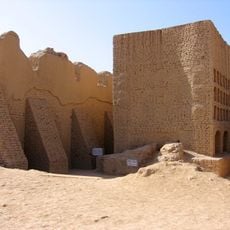
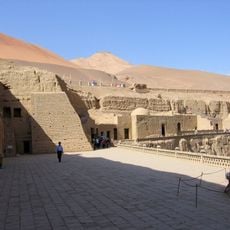
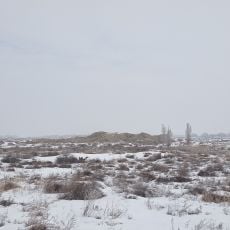
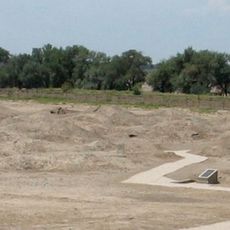
Turpan karez system, Irrigation system in Turpan, Xinjiang, China
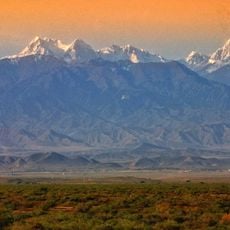
The Turpan karez system is an underground water network in Xinjiang made up of vertical wells and horizontal tunnels. The channels connect the wells and carry water from mountain slopes down to the farming fields on the plains.
Historical and archaeological research traces the Turpan karez network to the 2nd–3rd centuries BCE, making it roughly 2,200 to 2,500 years old; its origins are attributed to local innovation combined with technology arriving from western regions such as the Persian kehriz. The system made Turpan a watering stop on the Silk Road, where caravans of traders, missionaries and up to thousands of camels could rest a week or more. Today over 1,100 wells and channels remain, totalling more than 5,000 km, and the karez are on China's UNESCO Tentative List.
The system shows how people adapted to the dry climate by building underground channels to move water across the land. This solution shaped farming practices and daily life in the region for centuries.
Keep in mind that most channels lie underground and are not directly accessible to visitors. Some locations offer viewpoints or short tunnels to explore, which should be considered when planning your visit.
Water flows through gravity alone with no pumps or mechanical help, which was a remarkable engineering achievement for its time. This simple physical principle made it possible to move water across long distances without needing extra energy.
The community of curious travelers
AroundUs brings together thousands of curated places, local tips, and hidden gems, enriched daily by 93,573 contributors worldwide.