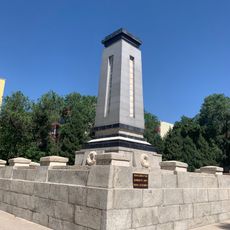
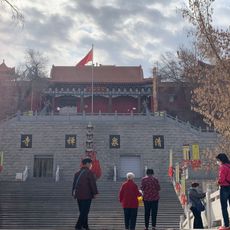
Xinjiang Museum, Museum of regional history and culture in Saybagh District, Ürümqi, China
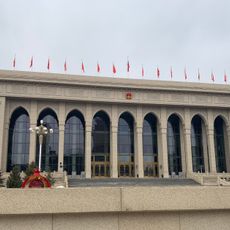
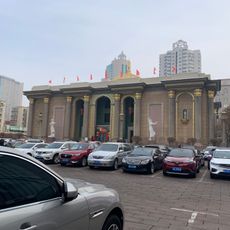
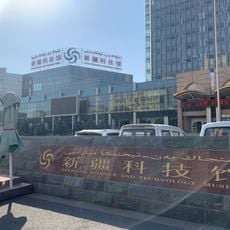
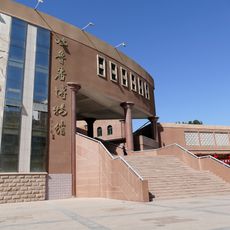
The Xinjiang Museum occupies a building on Xibei Road in Ürümqi whose two phases form the character 合. The first phase, opened in 2005, has a glass dome and a facade of white granite; the second, opened in 2022, adds galleries around a 400-square-metre courtyard. Its 24,593 objects include textiles, painted clay figurines, documents and mummies.
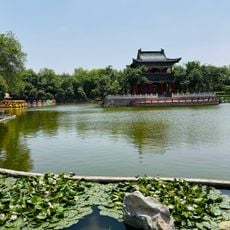
The museum traces its origin to a preparatory office approved by the Xinjiang provincial government in April 1953, which first occupied the Yuanbao Pavilion in Ürümqi People's Park. The Xinjiang Uygur Autonomous Region Museum was formally established in August 1959, and in 1962 it moved to its present site on Xibei Road, opening to the public on 1 October 1963. A new building opened in September 2005, and a second phase was completed in 2022.
The museum's name is written in Chinese and Uyghur on its facade, and the Uyghur name appears in both Arabic and Latin script. Exhibits include the 'Recover the Western Region's Glory of Yesterday' display of historical relics and a section on Xinjiang's ethnic customs, where visitors can see traditional clothing, tools, and everyday objects from the region's peoples.
The museum is open from Tuesday through Sunday and offers free admission to all visitors. It is located on Xibei Road and is easily accessible by public transportation.
The Loulan Beauty, displayed in the museum's ancient mummy gallery, is a female mummy found at the Tiebanhe cemetery near the Loulan ruins in Ruoqiang County. She dates to about 3800 years ago, measures 152 cm, and has brown skin and hair; her facial features and internal organs are preserved.
The community of curious travelers
AroundUs brings together thousands of curated places, local tips, and hidden gems, enriched daily by 93,831 contributors worldwide.