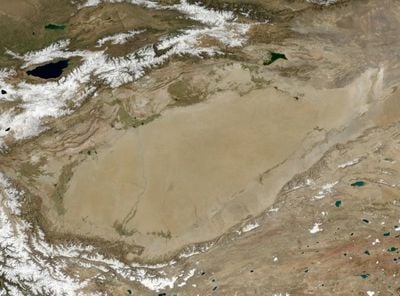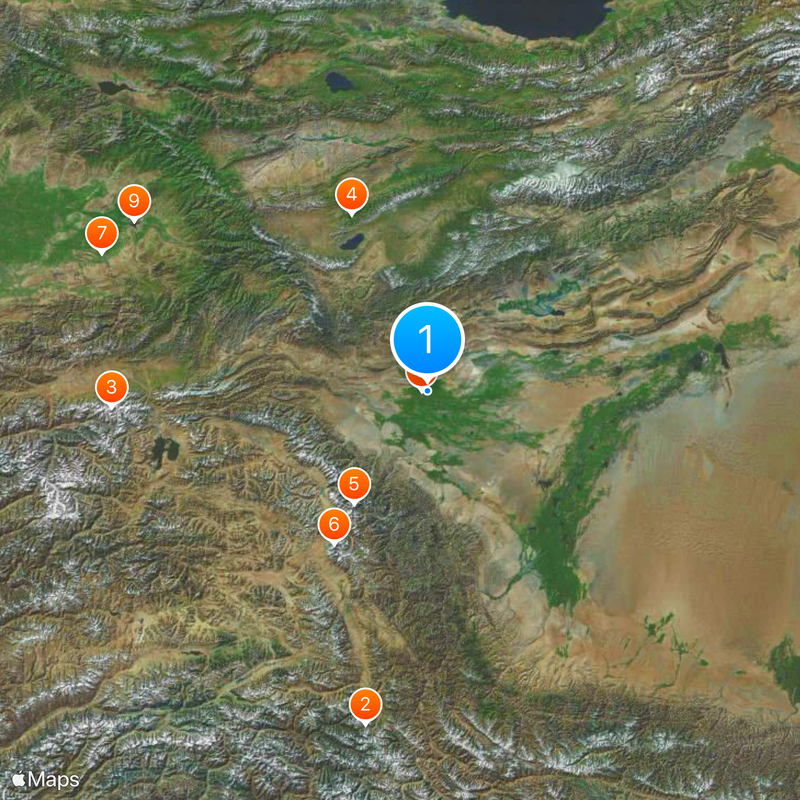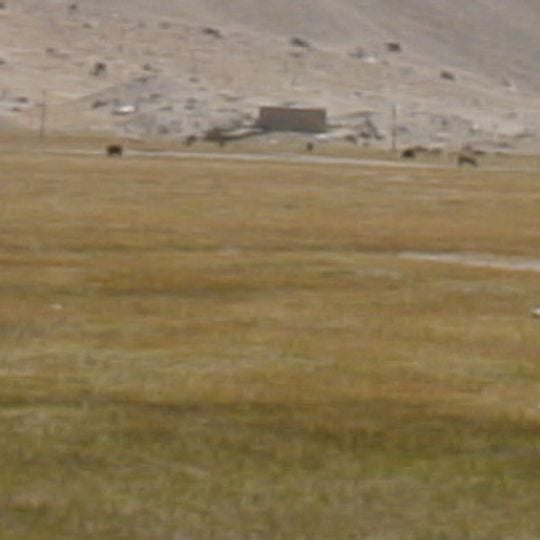
Tarim Basin, Endorheic basin in Xinjiang, China.
The Tarim Basin stretches between the Tian Shan in the north and the Kunlun in the south over a wide area, with the Taklamakan Desert at its center. Rivers from the mountains disappear into this landlocked region without reaching the sea, feeding scattered lakes and wetlands along the edges.
During the Han Dynasty, military advances into the region secured routes that later became part of the Silk Road. Caravans crossed the oases at the edges to enable trade between east and west.
The region shows housing forms and settlement structures that have been adapted to dryness and scarce resources for centuries. Oasis towns along the edges maintain traditional building methods and agriculture that depend on meltwater from the mountains.
Anyone exploring the area should prepare for large distances between settlements and extreme temperature swings. Water supply is limited, so thorough preparation is necessary.
Archaeological finds show mummies from around 2000 BC, whose preservation was enabled by the dryness of the climate. These remains provide clues about early populations that passed through or settled in the region.
The community of curious travelers
AroundUs brings together thousands of curated places, local tips, and hidden gems, enriched daily by 90,742 contributors worldwide.