Great Divide Basin, Endorheic basin in Wyoming, United States
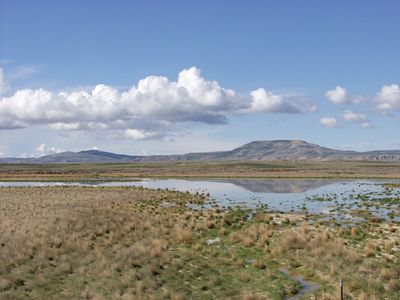
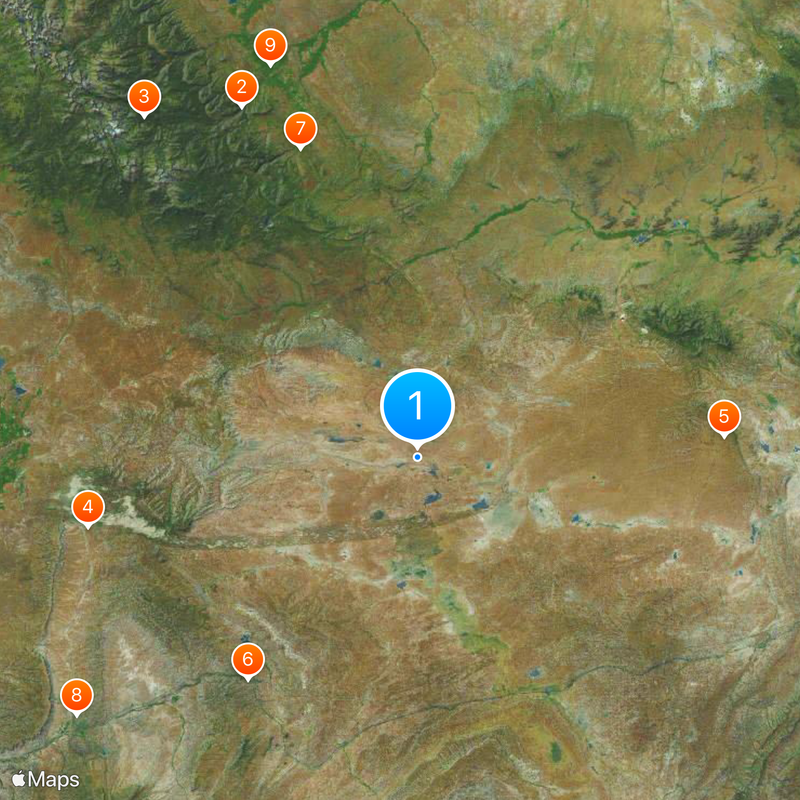
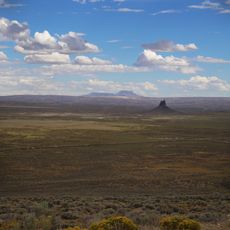
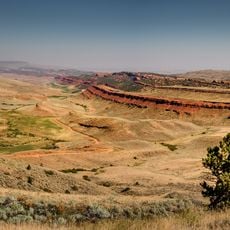
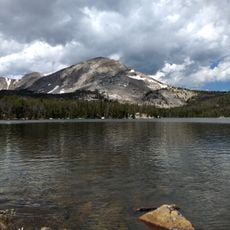
The Great Divide Basin is an endorheic basin in southwestern Wyoming, roughly oval and about 10,000 square km, enclosed by two branches of the Continental Divide. It is a high desert of sand dunes, bluffs, alkali flats and sparse grassland, with no closed forests; desert sagebrush feeds pronghorn, mule deer, feral horses and occasionally elk.
In the 1800s, pioneers deliberately avoided crossing this basin during westward expansion, choosing safer routes through South Pass and Bridger Pass instead. This choice kept many settlers away from the harsh terrain of the enclosed landscape.
The basin appears in literature: Arthur Conan Doyle set a romanticized version, the "Great Alkali Plain", in A Study in Scarlet (1887), and Jules Verne's Around the World in Eighty Days (1873) has Fogg's party crossing the Divide at Bridger Pass, which was on the Overland Trail, not the railroad. The name invites confusion with the much larger Great Basin further west.
Interstate 80 crosses the basin from east to west, offering the main access route through the region. Wamsutter is the only significant town where travelers can find water, fuel, and other supplies they might need.
The basin's name invites confusion with the far larger Great Basin west of the Continental Divide, which holds the Great Salt Lake and Salt Lake City and is inhabited. The Great Divide Basin itself is a closed depression of roughly 10,000 km², slightly larger than the island of Cyprus, and almost entirely federal land managed by the Bureau of Land Management.
The community of curious travelers
AroundUs brings together thousands of curated places, local tips, and hidden gems, enriched daily by 94,383 contributors worldwide.