Frontier Formation, Sedimentary geological formation in Wyoming, United States
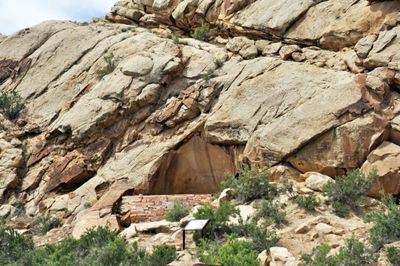
Frontier Formation is a sedimentary deposit in Wyoming composed of multiple rock layers including gray sandstone, dark shale, and oyster shell deposits. It extends across several counties and displays complex patterns of alternating yellow and gray sandstone layers with multiple coal seams.
The Frontier Formation was formally established in 1902 by W. J. Knight as thick beds of grey sandstone, shale and bentonite. Its sediments date to about 101–95 million years ago, spanning the latest Albian to early Cenomanian. Only two dinosaur species from the formation have been formally described and named.
The name comes from the Frontier Formation, formally established in 1902 by W. J. Knight. Its grey sandstone, shale and bentonite beds yield two named dinosaurs, Nodosaurus textilis and Stegopelta landerensis; the Stegopelta type specimen was damaged by erosion and by hooves of passing cattle before study.
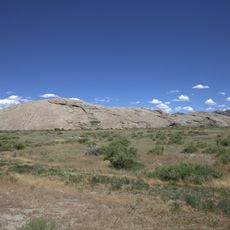
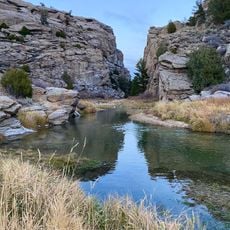
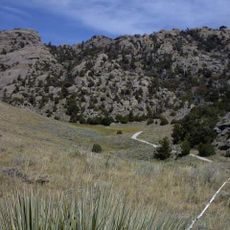
The formation is not a single site but scattered outcrops across northwest Colorado, southeast Idaho, southern Montana, northern Utah and western Wyoming; the coordinates point to central Wyoming. There is no visitor infrastructure or marked trail, so access depends on the landowner and on seasonal conditions. Study the outcrops on foot with a geological map and hammer.
The layers contain fossils of extinct dinosaurs such as Nodosaurus textilis and Stegopelta landerensis, allowing paleontologists to better understand the Cretaceous period. These discoveries make the formation an important window into the past that continues to be studied today.
The community of curious travelers
AroundUs brings together thousands of curated places, local tips, and hidden gems, enriched daily by 94,043 contributors worldwide.