Beaverhead Rock, Historic summit in Twin Bridges, Montana, US.
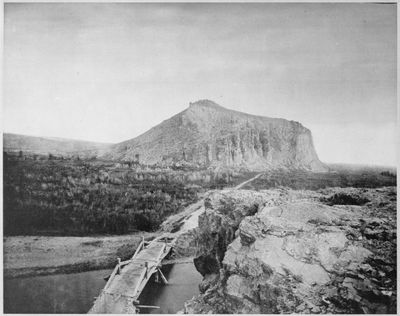
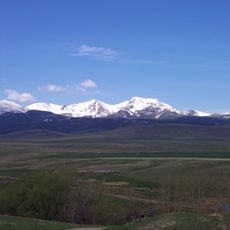
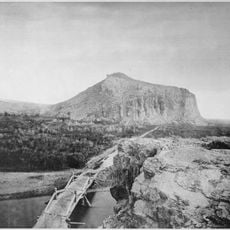
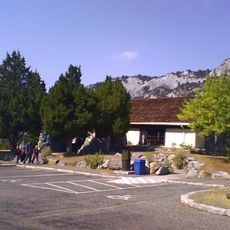
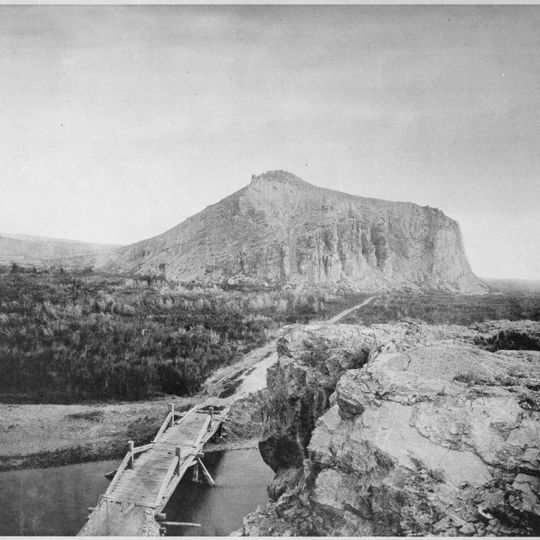
Beaverhead Rock is a granite formation that rises distinctly from the landscape along Montana Highway 41, naturally shaped like a beaver's head. The rock sits on the plains and is visible from a nearby parking area where visitors find interpretive materials about the site.
During the Lewis and Clark Expedition in 1805, Sacagawea recognized Beaverhead Rock and confirmed she was near her Shoshone homeland. This identification proved crucial because it led to trade negotiations for horses needed to continue westward.
The rock formation served the Shoshone people as a territorial landmark and helped them navigate across their traditional lands for generations. It held significance as a natural reference point embedded in their movement through the landscape.
The site is easy to reach, with a designated parking area about 14 miles south of Twin Bridges along Montana Highway 41. The location has interpretive signs and is accessible throughout the year.
The rock served as a critical navigation landmark for both Native American tribes and early explorers crossing the northern Rocky Mountains for centuries. Its distinctive shape made it a reliable reference point in an otherwise open valley.
The community of curious travelers
AroundUs brings together thousands of curated places, local tips, and hidden gems, enriched daily by 92,635 contributors worldwide.